




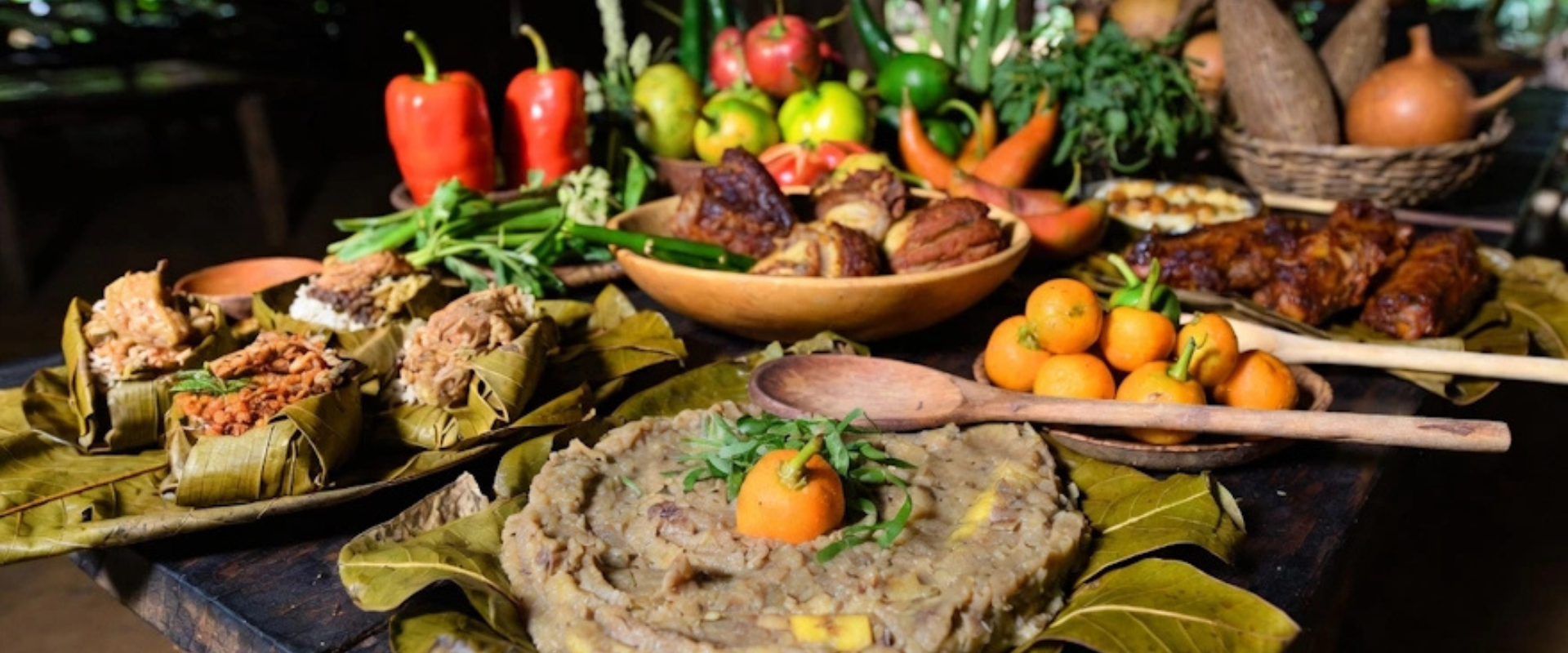
Peruvian jungle food is more than a collection of recipes; it is a window into the lives and traditions of the communities that inhabit the Amazon. In this region, everything is connected: the vast rivers serve as natural highways carrying fresh fish and fruits straight from the forest, while the dense, vibrant jungle provides tubers, herbs, and fruits that form the foundation of the local diet. Eating in the Amazon is not just about satisfying hunger; it is about sharing, learning, and keeping traditions alive, often passed down orally through generations, with each dish carrying stories and memories of those who prepare it.
And this is exactly what makes this cuisine so fascinating. In this article, I invite you to explore Peruvian jungle food: to discover its most representative dishes, understand the ingredients that make it unique, and see how the climate and daily life influence every preparation. Along the way, you will learn how Amazonian gastronomy has evolved without losing its essence, becoming a cultural heritage that conveys identity, creativity, and adaptation, capable of sharing the soul of the Amazon with anyone willing to experience it.
Typical Dishes of the Peruvian Jungle
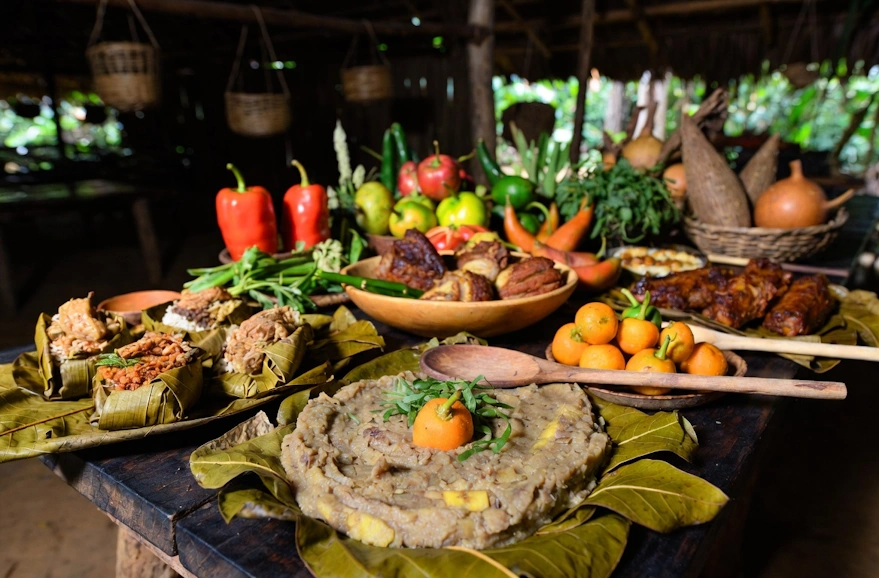
When we talk about the Peruvian Amazon, some dishes immediately come to mind: juane, tacacho with cecina, and inchicapi, among others. Each of these dishes carries its own story, its own preparation ritual, and its unique flavor found nowhere else in the country. Juane, for example, is made with rice, chicken, eggs, and local spices, all wrapped in bijao leaves and steamed. Traditionally eaten during religious celebrations and festivals, it is more than just food—it is a cultural symbol that connects the community with its history and beliefs. Tasting a freshly prepared juane, with the aroma of the leaves mingling with the spices, feels like experiencing the jungle itself in one bite.
Tacacho with cecina, on the other hand, combines the softness of roasted plantain with the intensity of smoked or dried pork. Beyond its flavor, it demonstrates the ingenuity of jungle inhabitants, who have learned to preserve and make the most of their resources sustainably. Inchicapi, a thick soup made with chicken or fish, peanuts, and aromatic herbs, shows how local ingredients can combine to create dishes that are nutritious, flavorful, and deeply cultural. Every recipe reflects skill, experience, and adaptation to the environment, and eating them is like tasting centuries of lived history on a plate.
How the Jungle Climate Influences Food
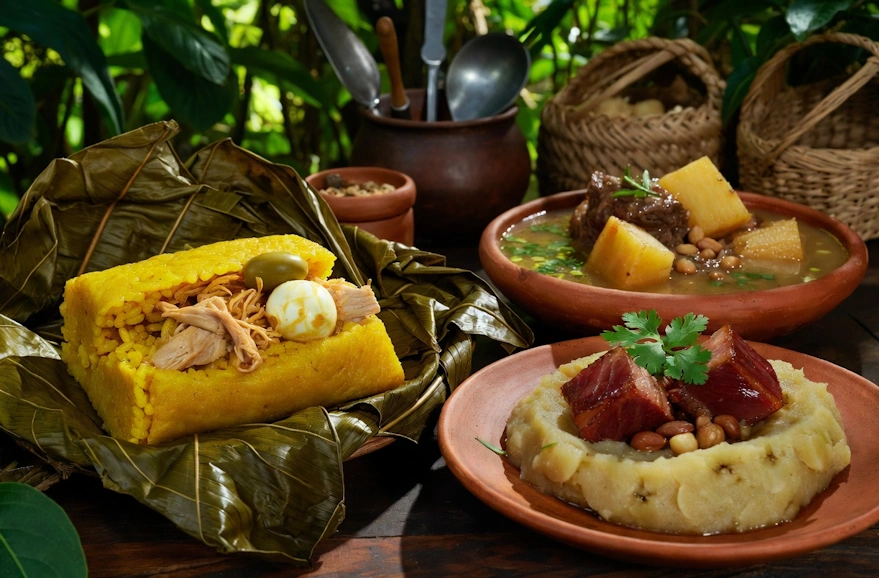
The climate of the Peruvian Amazon is hot, humid, and rainy for much of the year, with sudden showers that cool the air and refresh the forest. This combination of heat and moisture ensures that rivers are full of fresh fish, trees bear fruit almost year-round, and the vegetation is so dense that it can feel overwhelming. This climate directly impacts the cuisine: ingredients are abundant almost year-round, but communities have also developed preservation methods to keep food fresh and safe.
For instance, bijao leaves not only wrap the food during cooking but also protect it from excessive moisture, while smoking or sun-drying meat allows it to last longer without losing flavor. If you have ever been near an Amazonian river during a fishing day, you know that fish dishes are almost inevitable: fresh, nutritious, and delicious, with preparation techniques that vary depending on the type of fish and the season. The climate, therefore, is not just a backdrop but a silent protagonist in Amazonian cuisine, shaping what, how, and when people cook.
Key Ingredients in Amazonian Cuisine
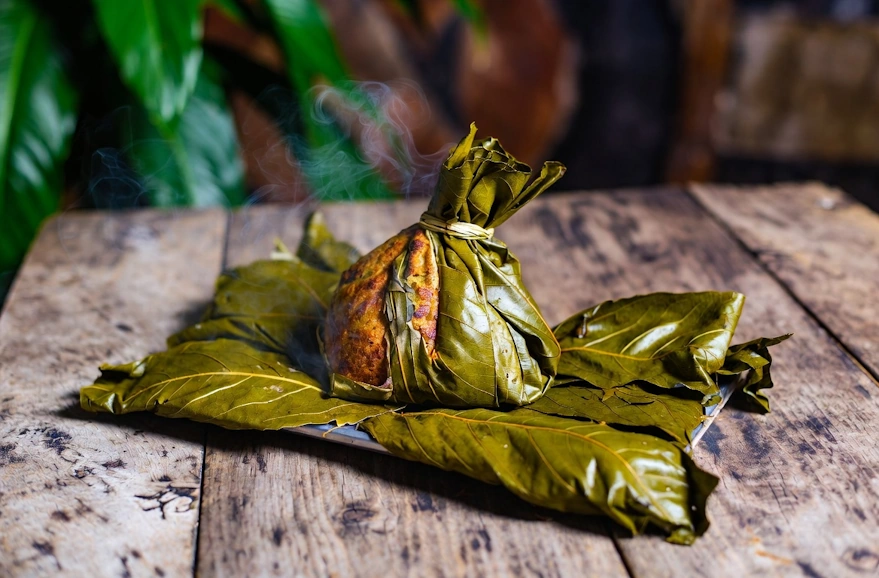
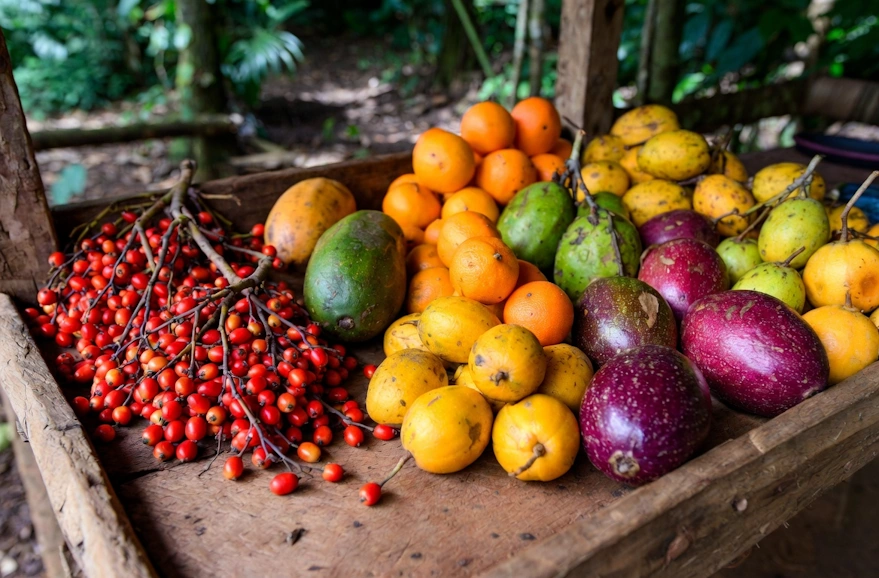
One of the most remarkable aspects of Peruvian jungle food is the variety of unique ingredients. Cassava and green plantain serve as the base for many traditional dishes, while river fish such as paiche, doncella, and gamitana provide fresh protein. Local herbs and spices not only enhance flavor and aroma but are often added at the last moment to preserve their freshness and vitality. Amazonian fruits such as camu camu, aguaje, cocona, and passion fruit appear in both sweet and savory dishes, adding surprising and refreshing notes.
What is particularly interesting is how these ingredients are combined based on the cook’s experience. Each recipe reflects knowledge passed down over generations: when to harvest fruits, how to cook freshly caught fish, and which herbs will balance the flavors best. It is not an exact science but rather an art learned by observing nature, tasting, adjusting, and always respecting the cycles of the jungle. Eating in the Amazon is, in essence, tasting centuries of wisdom concentrated in one dish.
Traditional Preparation Techniques
Traditional preparation methods are another hallmark of Amazonian cuisine. Cooking in bijao leaves keeps food moist while imparting aromas reminiscent of the forest. Smoking and natural fermentation add complexity and depth to the flavors. Although these methods may seem sophisticated today, they were developed over centuries as practical solutions to preserve food and make the most of available resources.
Food preparation is often a communal activity. Families gather to cook, share stories, and pass down knowledge from parents to children, and from grandparents to grandchildren. This communal aspect not only strengthens social bonds but ensures that each dish remains authentic, teaching younger generations the cultural importance of each technique and ingredient. Eating in the jungle is not just nourishment; it is participation in a ritual that connects the past, present, and future.
Conclusion
Peruvian jungle food is a reflection of history, culture, and living in harmony with nature. Each dish, technique, and ingredient tells a story of adaptation, creativity, and respect for the environment. Eating in the Amazon is an immersion into a culture that has learned to use its resources sustainably, celebrate abundance, and pass knowledge down through generations.
Exploring this cuisine is more than a culinary experience; it is a way to understand how people live in connection with their surroundings, how they developed unique culinary techniques, and how they maintain cultural identity through each plate. It is, ultimately, a way to touch history, nature, and tradition with every bite.
Frequently Asked Questions About Typical Peruvian Jungle Food
What are the typical dishes of the Peruvian jungle?
Some of the most popular dishes include juane, tacacho with cecina, inchicapi, and river fish preparations such as paiche or doncella, usually accompanied by cassava, plantain, and local herbs.
How does the jungle climate influence the food?
The hot and humid climate determines the availability of fresh ingredients and shapes preservation and cooking methods, such as steaming, smoking, and cooking in bijao leaves.
What are the key ingredients in Amazonian cuisine?
River fish, cassava, green plantain, Amazonian fruits such as camu camu, aguaje, and cocona, and local aromatic herbs are essential for jungle dishes.
What traditional techniques are used in jungle cooking?
Cooking in leaves, smoking, natural fermentation, and communal preparation are traditional methods that maintain authentic flavors and transmit cultural heritage.