

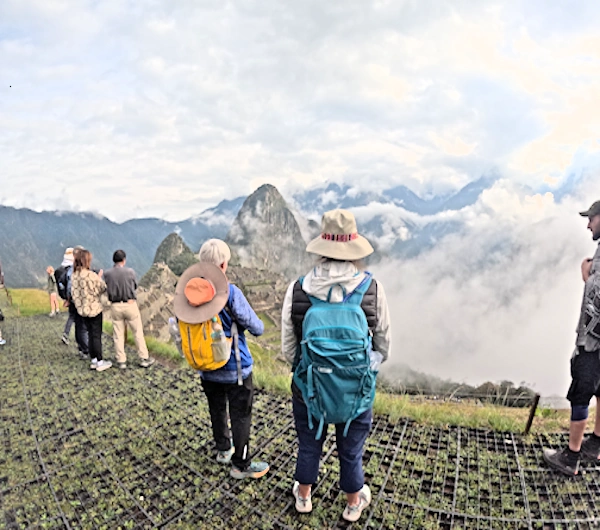
Inca Trail or Salkantay Trek
Salkantay or Inca Trail: Which is the best trek to Machu Picchu?
Choosing between the Salkantay Trek or the Inca Trail can be one of the biggest questions for anyone heading to do the trek to Machu Picchu. Both treks are amazing in their own right but both experiences are completely different from the landscape, culture, difficulty, climate, permits, and cost.
Table of Contents
- Key Differences Between the Salkantay and the Inca Trail
- What is the Inca Trail? The history, culture and exclusivity of the Inca Trail
- What is the Salkantay Trek? Extreme Nature and Biodiversity
- Benefits of the Salkantay
- Drawbacks of the Salkantay
- Which is easier? The Salkantay or the Inca Trail
- Inca Trail: Medium-High Difficulty
- Factors of the difficulty
- Salkantay Trek - High Difficulty
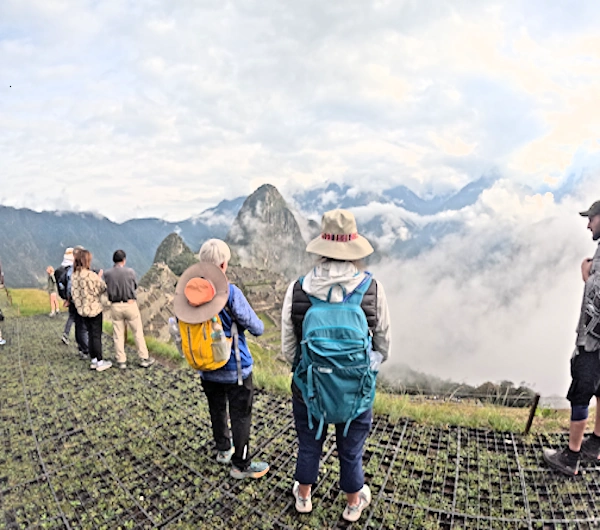
Key Differences Between the Salkantay and the Inca Trail
|
Factor |
Inca Trail |
Salkantay Trek |
| Type of experience | Cultural, histórical | Natural, scenic |
| Landscapes | inca ruins, cloud forests |
snorw- capped mountains, lagoons, jungle |
| Difficulty | Medium- high | high |
| Duration | 4 days / 3nights | 5 days / 4 nights |
| Permits | Limited and sell out quickly | no permits required |
| Price | More expensive | More affordable |
| Accsess to Machu Picchu | Enter through the Sun Gate (Inti Punku) | arrive via aguas calinetes |
| Highest altitude | 4,215 m. (Quechuas) | 4,650 m. ( Salkantay) |
What is the Inca Trail? The history, culture and exclusivity of the Inca Trail
The classic four-day Inca Trail is the most famous pilgrimage route in South America and one of the most iconic hikes on the five continents. Without a doubt, walking the steps of the original Inca trail built over five hundred years ago is a special, immersive, and spiritual experience.
This trail, which the Incas constructed more than five hundred years ago, was part of a network of over 40,000 km of ancestral pathways known as the Qhapaq Ñan (Master Road). Nowadays, by doing the Inca Trail, you experience a journey in nature, where each stone, each stairway, and each ruin tells us a separate story.
The inca trail is not, in respect to the other treks, a stunning trek in the nature, but it's also precious for it's cultural and historic wealth. During the four-day journey, in fact, you will be walking along the original Inca stone-paved pathways, you will cross cloud forests decorated with exquisite orchids, cross Inca tunnels dug in rock, and visit archaeological sites that are only exclusive to this hike.
Benefits of the Inca Trail
- 100% pure and original experience: There is no other trekking route in the world that will allow you to combine History, Andean architecture, and original roads. You will literally be stepping on the footprints of Inca messengers and priests.
- Stone paths made by the Incas: On the route, you will see bridges, staircases, and tunnels carved out of rock that have stood the test of time. A marvel of Andean engineering.
- Unique archaeological sites: The sites of Llactapata, Runkurakay, Sayacmarca, Wiñay Wayna, ceremonial sites, and others can only be visited if you do the Inca Trail, and there is no other way to get to those ruin sites.
- Entry into Machu Picchu through the Sun Gate: When you get there, it is the most important part of your journey, and it's the only access that allows you to enter the travel route just like the Incas.
- You arrive in a magical and emotional silence: Perfect for people looking for culture, connection, and mysticism. If your motivation for the trek is not just to walk, but to feel the energy and magic of the Andes, connect and look back at the history, and feel the spirituality, this is your trek.
What is the Salkantay Trek? Extreme Nature and Biodiversity
The Salkantay Trek stands out as the most stunning alternative trek to reach Machu Picchu and is an extraordinary adventure for entrepreneurs who seek extreme adventures, extreme places, and pure relationship with nature living in its most simple expression. Unlike the Inca Trail, there is no historical path down the Salkantay Trek, as we penetrate a higher range of the Vilcabamba mountain range that is dominated by the sacred Salkantay snow-capped mountain, which is the Inca sacred mountain and the second highest mountain in the Cusco region. National Geographic Traveler magazine highlighted it as one of the 25 most beautiful treks in the world. The Salkantay Trek is known for both its incredible biodiversity as well as its trekking that offer many surprises each day, going from high glacial mountain to tropical jungle within a single trek.
The approximate duration of this trekking is likely between 4 and 5 days, and one of its main attractions is the possibility of visiting the well-known Humantay Lagoon, a small turquoise water glass that has become one of the most photogenic places in Peru. But, in addition, each of the sections offer powerful landscapes, intense variations of climates and paths throughout huge mountains, rivers, waterfalls and wildlife.
Benefits of the Salkantay
No permits necessary (always available): One of the other top advantages of the Salkantay Trek is that there is no limited availability, unlike the Inca Trail. This makes it wonderful for people traveling shortly before the date.
Incredible high altitude scenery: During the trekking, you will see the towering Salkantay Snow-Capped Mountain (6,271 m), glacial lagoons, open valleys, waterfalls, and tropical forests. This is a perfect route for individuals who love natural and grandiose scenery.
Perfect for adventurous and nature lovers: The Salkantay is more authentic, wilder and less controlled adventure. Ideal for those types of people that enjoy challenges, rougher ground or long walks.
Cheaper than Inca Trail: because there are no permit costs and for more kinds of services and operators, the price is less for the Salkantay Trek, without arguing with quality.
Investing traveling days, more freedom for dates: You can book even a few days in advance. Now perfect for backpackers, spontaneous travelers or any other person who changes their route while their on the go.
Drawbacks of the Salkantay
- Higher physical requirements: The highest point of the Salkantay is the Salkantay Pass, which is 4,630 m tall. That part is a steep incline and therefore will require good acclimatization beforehand. There are different terrains (In some areas, the terrain is really difficult).
- You don’t arrive to Machu Picchu from the Sungate: You enter from Aguas Calientes instead; in contrast to the Inca Trail, which has a traditional entrance via Inti Punku. Because of this, the trek overall lacks the spiritual or ceremonial aspect of arriving via the Inti Punku.
- Extreme and changeable weather conditions: In a single day you can experience everything from glacial cold to powerful wind to rain to tropical heat - the Salkantay is for those who are able to adapt to the changing conditions.
Which is easier? The Salkantay or the Inca Trail
Choosing between the Inca Trail or the Salkantay Trek is to enter into the dialectic of physical demands of the trek itself. Both treks are beautiful experiences, but each demands more or less difficulty dependent on altitude, the changing and extreme weather, the different types of terrain, and how many hours of walking each day.
See below an explicit comparison with details so you can interpret which trek suits your preparation and style.
Inca Trail: Medium-High Difficulty
The Inca Trail is definitely associated with continuous effort, though not from the extreme side. Where possible, the most difficult part of the route is on the vertical Inca staircases; the up and down; and walking many hours of the day. However, its altitude is lower than the Salkantay trekking, which makes the route a bit easier for the majority of travelers who have a reasonably acceptable fitness level.
Factors of the difficulty
- Steep Inca staircases: The main most difficult feature of the trail are the well-known "infinite staircases," because they are irregular and narrow for path, and thus it can be challenging to maintain a good leg rhythm, especially when you are climbing toward the high point of the route.
- Long days of walking: You walk between 6 and 9 hours of the day even with the group you are going with. The total distance is not excessive compared to some treks; however, there were many ups and downs, thus it can eventually become quite heavy during the trek.
- Average altitude: The highest point reached is the Warmiwañusca or "Dead Woman's Pass" at 4,215 m. At this altitude you may experience some fatigue or short of breath, however, if all proper procedures are followed prior to your trekking programs, it should usually be manageable.
Salkantay Trek - High Difficulty
The Salkantay trek is conisdered a high-level trek in the Cusco region because of its wild character, it is at an altitude of over 4,600 meters, and it has very extreme climatic change. It is intended for travelers who have some previous experience or want a considerable physical challenge.
Factors of difficulty:
- Strong ascent to the Salkantay Pass (4,630 m): The day of the ascent to reach the Salkantay Pass is the hardest day of this trekking as you walk for a very long period of time, you are constantly going up hill, and it is very high altitude. The lack of air adds to the effort.
- Drastic climate changes: In the same day you can go from temperatures below freezing to tropical heat. Wind, rain or even snow can make the trekking somewhat unpredictable and more difficult.
- More rural and wild terrain: The trail has sections that have rocks, sand, irregular path and technical downhill. It is a less "structured" trail than the Inca trail, and physically, you need to be more prepared.
- More mileage: Some days you are walking 9 or 10 or more hours, and for this you need endurance and good aerobic capacity.