

 ES
ES
Everything to Know Before Visiting Morro Solar in Lima
Where Morro Solar Is Located and What Makes It Unique
Finding Morro Solar in the Chorrillos District
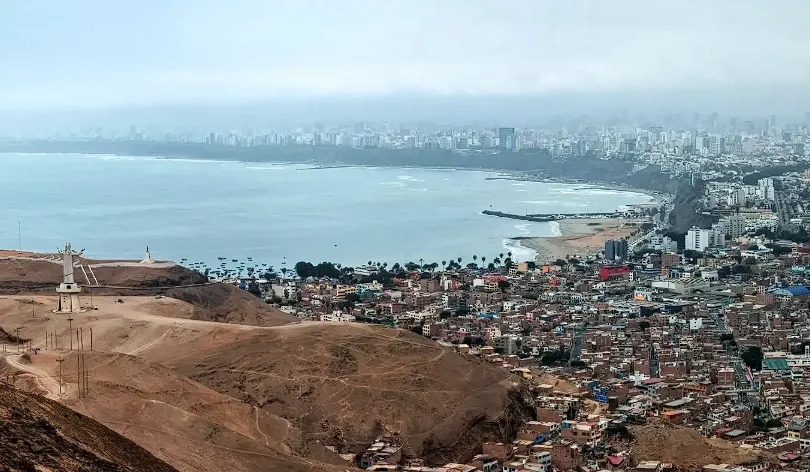
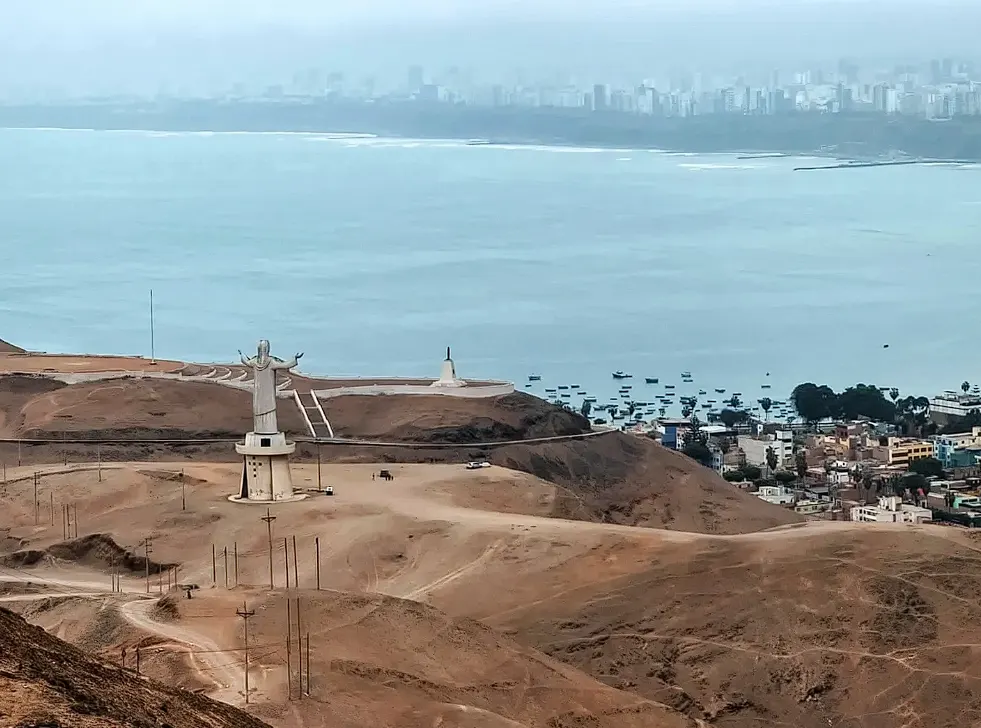
Morro Solar sits in the Chorrillos district, one of Lima's most historically layered coastal neighborhoods. Unlike the flat, grid-like streets of Miraflores or San Isidro, Chorrillos rises abruptly from the Pacific into a cluster of rocky hills, and Morro Solar is the tallest and most prominent of them all. It overlooks La Herradura beach and the Costa Verde highway, giving visitors a wide vantage point over the ocean, the city, and the desert hills behind Lima.
To reach the base from central Lima, head south along the Panamericana Sur or Costa Verde until you reach the Chorrillos waterfront. The hill is hard to miss: a large rocky outcrop crowned by the Cristo del Pacífico statue, visible from a distance. From Miraflores, the trip takes roughly 15–20 minutes by car or 30–40 minutes by bus, depending on traffic.
Table of Contents
- Elevation, Coordinates and Rock Formation Facts
- The History Behind the Morro Solar Landmark
- The Battle of San Juan and Chorrillos During the War of the Pacific
- The Monument to the Unknown Soldier and Miguel Iglesias
- Pre-Inca and Ichma Archaeological Traces on the Hill
- Top Attractions to Visit at Morro Solar
- Cristo del Pacífico, the Most Photographed Viewpoint
- The Planetarium and José Castro Mendívil Observatory
- The Pope's Cross
- The Virgin of Morro Solar Sanctuary
- The Transmission Antennas as a Landmark Reference
- How to Reach Morro Solar from Lima or Miraflores
- Public Transportation Routes to Morro Solar
- Taxi and Ride-Hailing App Costs from Lima Center
- Walking and Cycling Access Points
- Guided Tours and Activities Available at Morro Solar
- Half-Day Hiking Tours and Local Operators
- Paragliding Experiences Near Morro Solar
- Mountain Biking and Bike Rental Services
- Best Times for Photography and Drone Shots
- Birdwatching Tours on the Hill
- Safety Information Before Hiking Morro Solar
- Safety Tips for Walking and Hiking the Trails
- Current Social Context Around Alto Perú and Why Guides Help
- Recent Cyclist Accidents Reported at Morro Solar
- Evictions and the Current Situation on the Hill
- Restaurants and Hotels Near Morro Solar
- Cevicherías and Restaurants With a View in Surco and Chorrillos
- Well-Reviewed Hotels Close to Morro Solar
Elevation, Coordinates and Rock Formation Facts
Morro Solar rises to approximately 251 meters (823 feet) above sea level, modest by Andean standards but one of the highest natural points in metropolitan Lima. Its coordinates are roughly 12°10′S, 77°02′W. The hill is a cluster of several hills formed from sedimentary rock, mainly sandstone and conglomerate, associated with the geological formations that shape Lima's southern coastline and the cliffs along the Costa Verde.
The exposed rock layers, tilted at visible angles, reflect a long history of coastal sedimentation, which makes the hill interesting for anyone curious about geology. The terrain is rocky, uneven, and steep in sections, so sturdy footwear is essential for anyone planning to hike the trails.
The History Behind the Morro Solar Landmark
The Battle of San Juan and Chorrillos During the War of the Pacific
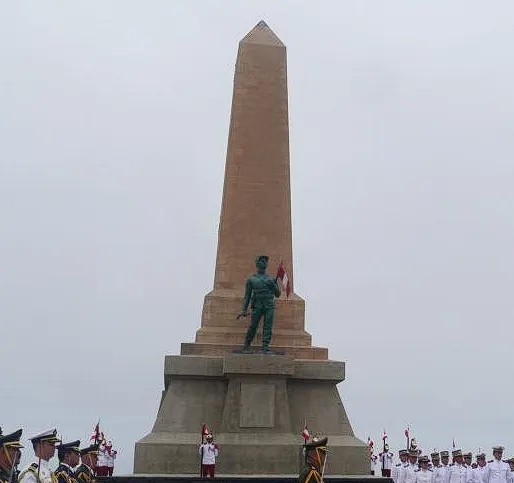
Morro Solar is not just a viewpoint, it is a war memorial. On January 13, 1881, during the War of the Pacific (1879–1884), Chilean forces advanced on Lima's southern defenses. The Battle of San Juan and Chorrillos was fought across these hills, with Morro Solar serving as a key defensive position for the Peruvian army. Historians describe the battle as one of the deadliest episodes of the war, with heavy casualties on the Peruvian side and the town of Chorrillos largely destroyed in its aftermath.
Walking the hill today, visitors can still find old cannon emplacements, remnants of trenches, and memorial plaques marking where the fighting was fiercest. The Monument to the Unknown Soldier stands near the summit, honoring the Peruvian fighters who died defending the capital, and the site remains one of the country's most significant battlefield memorials.
The Monument to the Unknown Soldier and Miguel Iglesias
Near the summit, visitors will find two notable monuments. The Monument to the Unknown Soldier is a solemn, military-style memorial that commemorates the anonymous soldiers who fell during the 1881 battle, and it remains a point of reflection for veterans and history students visiting the hill.
A short walk away stands a monument referencing Miguel Iglesias, the Peruvian president who signed the Treaty of Ancón in 1883, ending the War of the Pacific on terms that remain debated among historians. Some view him as a pragmatist who prevented further losses, while others see the treaty as a national defeat. For visitors, the two monuments together offer a layered perspective on sacrifice, defeat, and national memory.
Pre-Inca and Ichma Archaeological Traces on the Hill
Long before the War of the Pacific, Morro Solar held significance for earlier coastal cultures. Archaeological work in the wider Chorrillos area has identified traces linked to the Ichma culture, which preceded the Inca in the Lima region and used coastal hills for ceremonial and lookout purposes.
While there are no major restored ruins on the hill itself, researchers have documented pottery fragments and other traces of earlier occupation in the surrounding area. The Virgin of Morro Solar Sanctuary may occupy ground that carried spiritual meaning long before it became a Catholic shrine, illustrating how the hill has been reused across different eras, from early ceremonial use to a national battlefield memorial.
Top Attractions to Visit at Morro Solar
Cristo del Pacífico, the Most Photographed Viewpoint
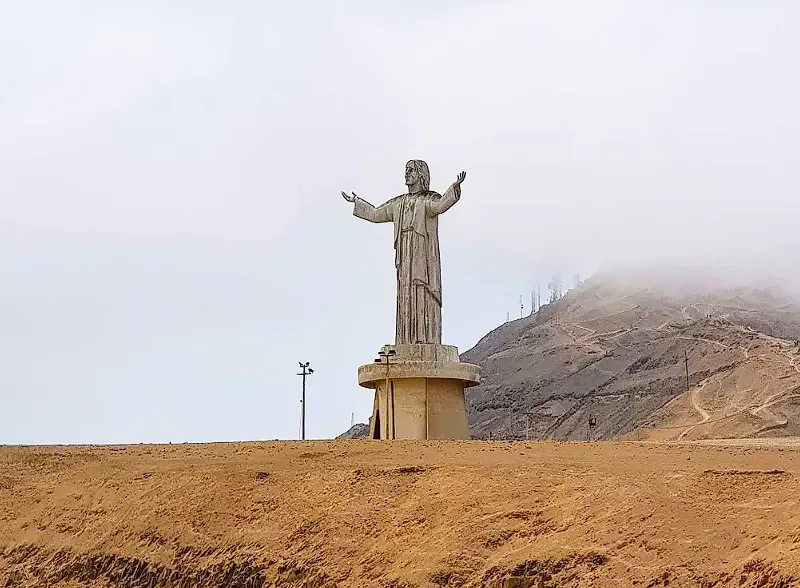
The Cristo del Pacífico (Christ of the Pacific) is the best-known landmark on Morro Solar. Standing 37 meters (121 feet) tall, the statue was inaugurated in 2011 and is visible from much of southern Lima. At night, it is lit up, creating a beacon-like effect visible from the coast.
The platform at its base offers some of the best panoramic views on the hill: the Pacific Ocean to the west, the Chorrillos district below, the Costa Verde highway along the coast, and, on clear days, the outline of the Andes in the distance. For photographers, sunset and blue hour tend to offer the most dramatic light, since the statue faces west toward the ocean.
For drone operators, the open space around the Cristo generally allows for clear flight paths, but the nearby transmission antennas can interfere with GPS and compass readings, so calibrating before takeoff and flying with caution is recommended.
The Planetarium and José Castro Mendívil Observatory
The Planetarium of Lima (Planetario José Castro Mendívil) is one of Peru's oldest planetariums and one of the more underrated attractions on Morro Solar. Located near the summit, it offers astronomical shows, telescope observations, and educational programs about the night sky.
Shows have historically run on Sundays, with tickets purchased in cash on-site rather than online, so it's worth confirming current days, times, and prices directly with the planetarium before visiting, especially on weekends when capacity can be limited. The programming often connects modern astronomy with Andean and Inca approaches to the night sky, which makes it a good stop for families and curious travelers alike.
The observatory houses a telescope used for public stargazing sessions on clear nights. Checking the planetarium's official channels ahead of a visit is the best way to confirm special events such as meteor shower viewings.
The Pope's Cross
Near the Cristo del Pacífico stands La Cruz del Papa (The Pope's Cross), erected to commemorate Pope John Paul II's visit to Peru in 1985 and the outdoor Mass held at this site. The cross is simpler than the Christ statue but holds real significance for Peru's Catholic community, marking a location where a very large crowd once gathered.
For visitors, the Pope's Cross is a quieter stop than the main Cristo platform, and it offers a slightly different angle for photography, with the Chorrillos coastline in the background.
The Virgin of Morro Solar Sanctuary
The Santuario de la Virgen del Morro Solar is a small, active Catholic chapel near the hill's summit, dedicated to the Virgin Mary under the title "Virgen del Morro Solar." It serves as a pilgrimage site for local devotees, particularly around the Feast of the Assumption on August 15 and other Marian celebrations.
The sanctuary's architecture is modest, a simple chapel with a bell tower, but its atmosphere is distinct. Visitors are generally welcome during opening hours, and the interior often features votive offerings left by pilgrims. Even for non-religious travelers, the sanctuary is a reminder that Morro Solar continues to function as a living sacred space, not only a historical site.
The Transmission Antennas as a Landmark Reference
The radio and television transmission antennas near Morro Solar's summit are hard to miss and serve a practical purpose for visitors: if you can see the antennas, you're heading toward the summit. They also roughly mark the boundary between the more developed tourist area (Cristo, planetarium, monuments) and the less-maintained trails that descend the hill's eastern and northern faces.
For drone pilots and photographers, it's worth noting that the antennas can interfere with drone compasses and GPS units. Keeping visual line of sight and avoiding flight directly over the antenna cluster is a sensible precaution.
How to Reach Morro Solar from Lima or Miraflores
Public Transportation Routes to Morro Solar
The most budget-friendly way to reach Morro Solar is by public bus. From Miraflores, buses heading south along Avenida Arequipa or Avenida Javier Prado toward Chorrillos will get you close. Get off at the Malecón de Chorrillos, the elevated walkway above La Herradura beach, from where it's a short walk to the base of the hill and an uphill walk on a paved path toward the summit area.
Fares are low, typically a few soles, though exact amounts change over time. Not all drivers know the hill by name, so mentioning "Cristo del Pacífico" as a reference point is usually more effective than "Morro Solar."
From Lima's historic center, the Metropolitano bus line running south toward Chorrillos, followed by a short local bus or taxi ride, is a practical option. Total journey time from the center is typically 45–60 minutes depending on traffic.
Taxi and Ride-Hailing App Costs from Lima Center
For convenience, especially if you're carrying camera or hiking gear, ride-hailing apps are a reliable option. As a general reference:
- From Miraflores to Morro Solar: a short ride of around 15–20 minutes.
- From Lima's historic center to Morro Solar: around 30–45 minutes depending on traffic.
- From Barranco to Morro Solar: around 10–15 minutes.
Fares vary with demand and time of day, so it's best to check the current estimate in your app rather than relying on a fixed price. Requesting the driver head directly to the Cristo del Pacífico or the planetarium entrance, rather than just the base of the hill, saves the uphill walk. Using "Cristo del Pacífico, Chorrillos" as the destination tends to work well if the driver is unfamiliar with "Morro Solar."
Walking and Cycling Access Points
For active travelers, Morro Solar can be reached on foot or by bicycle from a few different points:
- From La Herradura beach: a coastal path leads north from the beach area, paved but steep, with a climb of roughly 15–20 minutes to the summit.
- From the Costa Verde highway: a service road near the Chorrillos tunnel gives cyclists access to the hill, popular with mountain bikers looking for a challenging ascent.
- From Surco: Calle Morro Solar connects to trails on the hill's eastern face, a quieter and less touristy approach.
The paved road to the summit is open to vehicles but narrow in places, so cyclists should stay alert, wear a helmet, and be cautious during busier weekend hours.
Guided Tours and Activities Available at Morro Solar
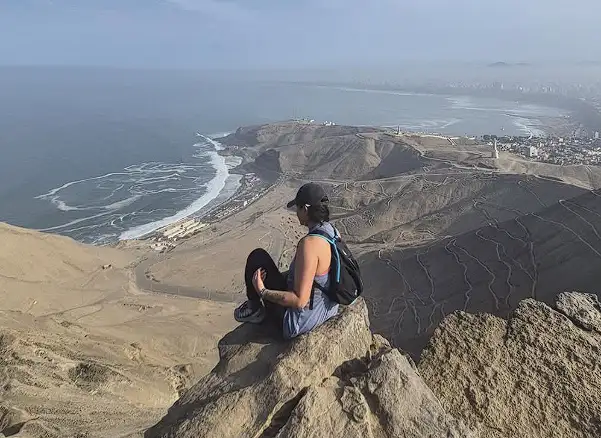
Half-Day Hiking Tours and Local Operators
Morro Solar can be explored independently, but guided hiking tours add real value, especially for visitors interested in history and local geology. Tour operators based in Chorrillos and Miraflores commonly offer half-day tours of around 3–4 hours covering the hill's main attractions, along with context on the War of the Pacific and the surrounding landscape.
These tours typically include a guided walk to the summit, time at the Cristo del Pacífico for photos, and sometimes a visit to the planetarium when shows are running. Costs and inclusions vary by operator and group size, and Spanish-speaking guides are standard, with English-speaking guides usually available on request and at a higher rate.
Paragliding Experiences Near Morro Solar
Morro Solar's elevation and coastal winds make the area appealing for paragliding, though most commercial tandem flights in Lima operate from the nearby Miraflores cliffs rather than directly from Morro Solar's summit. Experienced local pilots occasionally use the hill for thermal soaring, but this is not a standard tourist offering.
Travelers interested in paragliding in Lima can look into tandem flight operators based in Miraflores, a short distance north of Morro Solar, which often include aerial views of the hill as part of the flight.
Mountain Biking and Bike Rental Services
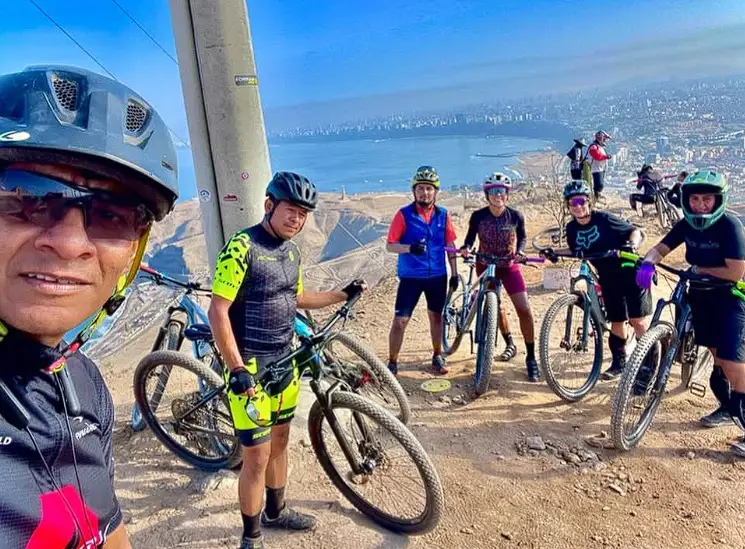
Mountain biking is one of the more popular activities on Morro Solar. The hill combines paved access roads, dirt singletrack, and rocky technical descents suited to intermediate and advanced riders.
Bike shops near the Malecón in Chorrillos commonly offer hourly and daily rentals, and several local operators run guided mountain-biking tours of Morro Solar and the surrounding hills that include a bike, helmet, and guide. E-bike rentals are also increasingly available for riders who want help with the steep ascent before tackling the descent.
The main paved road is beginner-friendly, while the dirt trails on the northern and eastern faces are more technical, with loose rock and tight turns. A helmet and spare inner tubes are strongly recommended, since the rocky terrain causes frequent flats.
Best Times for Photography and Drone Shots
Timing has a big impact on the kind of photos you'll come away with:
| Time | Best For | Crowds | Lighting Quality |
|---|---|---|---|
| 6:00–8:00 AM | Cityscape shots, Cristo silhouette | Low | Soft, directional |
| 10:00 AM–12:00 PM | Planetarium interior, monument details | Medium | Harsh but clear |
| 4:00–6:00 PM | Golden hour, ocean panoramas | High | Warm, golden tones |
| 6:00–7:30 PM | Blue hour, Cristo illuminated | Medium | Deep blues, artificial lights |
For drone photography, the open summit area allows for wide aerial shots, though flying near the transmission antennas should be done with caution. Facing west toward the ocean during sunset, with the Cristo del Pacífico in the foreground, tends to produce the strongest results. As with any drone flight in Peru, it's worth checking current local regulations before flying near communication installations.
Birdwatching Tours on the Hill
Morro Solar's coastal scrub and rocky outcrops support a range of birdlife, making it a worthwhile stop for birdwatchers visiting Lima. Species commonly reported in the area include the Peruvian pelican, Inca tern, Peruvian booby, coastal miner, and black vulture, among others typical of Peru's central coast.
Early morning and late afternoon tend to be the most active periods for seabird activity. While dedicated birdwatching tours specifically for Morro Solar are uncommon, local nature guides in Chorrillos can often arrange custom outings that combine the hill with the nearby Pantanos de Villa wetlands, one of Lima's most important bird habitats.
Safety Information Before Hiking Morro Solar
Safety Tips for Walking and Hiking the Trails
Morro Solar is generally fine for visitors who take basic precautions, but it's an open, semi-wild urban space rather than a fully controlled tourist park. A few practical points to keep in mind:
- Go in groups where possible, especially on the unpaved trails. The paved areas near the Cristo and planetarium see steady foot traffic, but the quieter trails on the northern and eastern slopes are more isolated, and petty theft has been reported there.
- Wear sturdy, closed-toe shoes. The terrain is rocky and uneven, and open footwear is impractical and unsafe.
- Stay on marked paths, since loose rock and rockfall are a real hazard on steeper sections.
- Bring water and sun protection. There are no drinking water stations on the hill, and the exposed rock intensifies the heat.
- Avoid the hill after dark. The trails are unlit, and the area around the base can feel less secure at night.
- Keep valuables out of sight, and avoid displaying expensive cameras or jewelry on the quieter trails.
Current Social Context Around Alto Perú and Why Guides Help
The neighborhood of Alto Perú, at the base of Morro Solar's eastern slope, is one of the more economically disadvantaged areas of Chorrillos. The summit attractions are generally safe during daylight hours, but access routes through Alto Perú can feel less predictable, particularly for visitors carrying visible valuables.
A local guide can be useful here: guides tend to know the safer access points, can offer cultural context beyond what's on any sign, and can help communicate with local authorities if needed. Visitors exploring independently may prefer to stick to the western and southern approaches, from La Herradura beach and the paved road to the Cristo, and avoid wandering into residential streets at the base of the hill.
Recent Cyclist Accidents Reported at Morro Solar
Mountain biking on Morro Solar is popular but carries real injury risk. Cyclist accidents have been reported on the more technical downhill sections, particularly where loose rock and steep drops create hazardous conditions, with falls and collisions among the most common causes of injury.
To reduce risk, a helmet should be considered non-negotiable, and riders should inspect brakes, tire pressure, and chain condition before any descent. Riding within your skill level matters more here than on a groomed trail system, since the more advanced downhill sections are unmarked and unmaintained. Carrying a basic first-aid kit and knowing the location of the nearest hospital, such as Hospital María Auxiliadora in the area, is a sensible precaution.
Evictions and the Current Situation on the Hill
Morro Solar has been the site of ongoing land disputes and informal settlements for years. The hill's lower slopes, particularly on the eastern and northern faces, have periodically seen evictions of families living on land considered public property, involving municipal authorities and, at times, police.
For visitors, the summit tourist area, including the Cristo, planetarium, and monuments, is not affected by these disputes and remains accessible during daylight hours. The eastern and northern trails may occasionally be closed or patrolled during eviction operations; if you encounter police tape or barricades, use an alternative route rather than attempting to bypass them. Since the situation can change with little notice, checking recent local news or asking your accommodation for updates is a good idea before exploring the less-traveled trails.
Restaurants and Hotels Near Morro Solar
Cevicherías and Restaurants With a View in Surco and Chorrillos
The neighborhoods around Morro Solar offer solid options for Peruvian food:
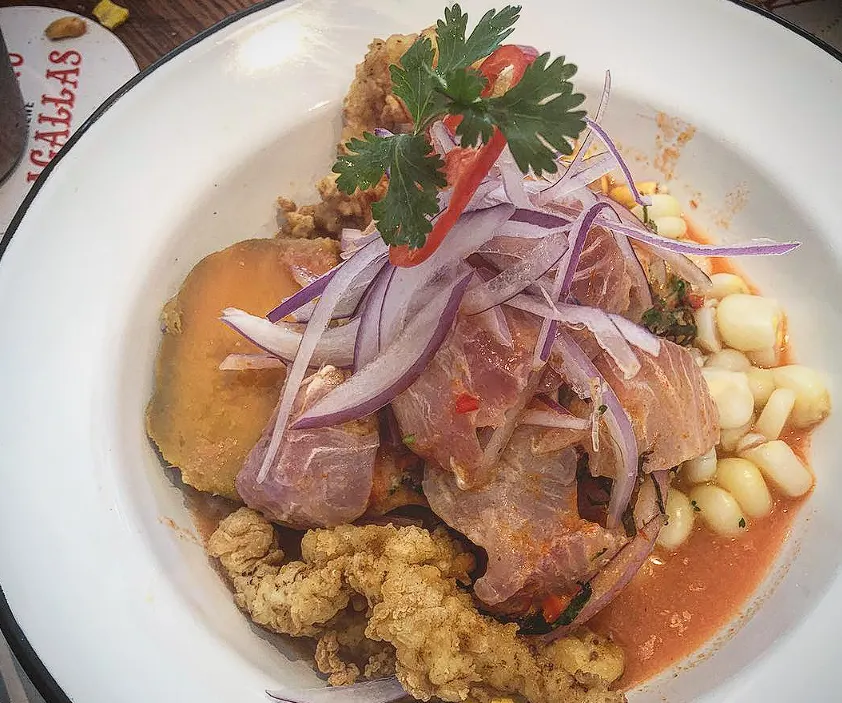
- Chorrillos branches of well-known ceviche restaurants offer classic Peruvian ceviche, tiradito, and fried fish with ocean views, generally in a mid-range price bracket.
- Casual seafood spots along the Chorrillos waterfront specialize in fried seafood platters and causas, often at more budget-friendly prices, with views toward La Herradura beach and Morro Solar in the distance.
- Cevicherías along Calle Morro Solar in Santiago de Surco include some higher-end options known for creative fusion-style ceviches.
- Traditional criollo restaurants in Chorrillos serve dishes like lomo saltado, ají de gallina, and pisco sours in a more classic, historic setting.
Many Chorrillos restaurants offer a "menú del día," a set weekday lunch menu that tends to be an affordable way to eat well.
Well-Reviewed Hotels Close to Morro Solar
Most visitors base themselves in Miraflores or Barranco, but staying closer to Morro Solar can be convenient for early hikes or sunset photography.
- Mid-range hotel chains in San Isidro, roughly 20 minutes from Morro Solar by car, typically offer amenities like a pool, gym, and airport shuttle.
- Boutique hotel chains in Miraflores, around 25 minutes away, are known for reliable service and breakfast.
- Budget-friendly hotels in Miraflores offer clean, simple rooms within a similar distance from the hill.
- Short-term apartment rentals in Chorrillos itself put you within walking distance of Morro Solar, with a range of price points depending on whether you book a private room or a full apartment. Listings near La Herradura beach tend to offer a good balance of convenience and safety.
Prices for all of the above vary by season and availability, so it's worth checking current rates directly before booking.