

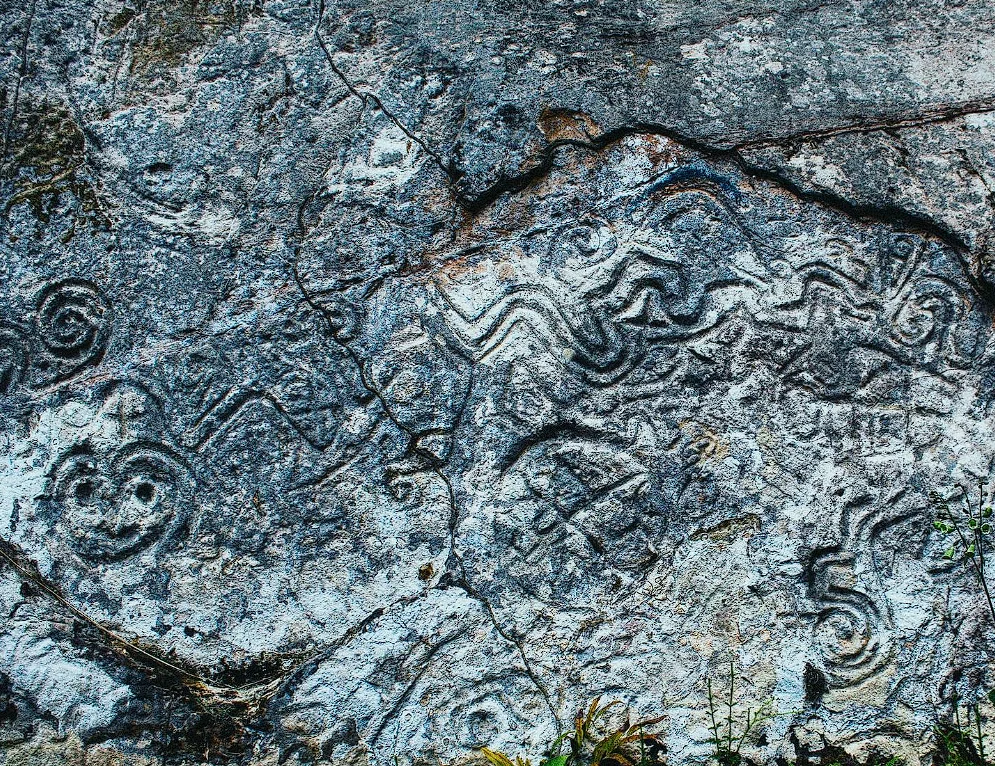
Paititi: The Lost City of Gold Hidden in the Peruvian Jungle
Deep in the southeastern Peruvian jungle, somewhere past where roads end and rivers replace highways, there's supposed to be a city made of gold. Temples covered in precious metals. Inca treasures hidden from the Spanish conquistadors. A civilization that vanished into the Amazon and never came back out.
That city is called Paititi. And for over 500 years, people have been trying to find it.
Some say it's real. Some say it's a myth that grew out of desperation — a story the Inca told themselves as their empire collapsed around them. A few explorers claim they've found it. None of those claims have held up.
But the legend keeps growing. And whether Paititi actually exists or not, the story behind it tells you more about the Inca Empire, the Spanish conquest, and the limits of modern exploration than most history books will.
Here's everything we know — and everything we don't.
Table of Contents
- What Is Paititi and Is It Real?
- The Meaning Behind the Name
- How Paititi Connects to El Dorado
- Where Is Paititi Located?
- The Leading Theories — Cusco, Bolivia and Manu
- What Satellite and Lidar Data Show
- The Search for Paititi Through the Centuries
- Spanish Expeditions and the 2001 Italian Discovery Claim
- What Indigenous Communities Say
- Has Anyone Actually Found It?
- How to Get Close to Paititi
- Regions Associated With the Lost City
- What to Expect From the Jungle Trek
- Permits and Travel Logistics
- Paititi vs Machu Picchu
- Why One Was Found and the Other Was Not
- Can Paititi Ever Be Found?
- What Archaeologists and Technology Say
- Why the Legend Keeps Growing
- Paititi in Pop Culture
- Shadow of the Tomb Raider
- Civilization 6
- Books and Documentaries
- Frequently Asked Questions
- Is Paititi a Real Place?
- Has the Lost City of Paititi Been Found?
- Is Paititi the Same as El Dorado?
- Can You Visit Paititi Today?
- Why Do Archaeologists Remain Cautious?
What Is Paititi and Is It Real?
Paititi is a legendary lost city believed to be hidden somewhere in the dense rainforest of southeastern Peru, possibly extending into Bolivia or western Brazil. According to the legend, when the Inca Empire fell to Spanish conquistadors in the 1530s, a group of Inca fled south into the jungle carrying enormous amounts of gold, silver, and sacred artifacts. They supposedly built — or found — a hidden city where they continued their civilization away from European eyes.
That city became known as Paititi.
The core of the legend is straightforward: the Inca had more gold than the Spanish could carry, and when the empire collapsed, a significant portion of that wealth disappeared into the jungle. Paititi is where it supposedly ended up.
The Meaning Behind the Name
The word "Paititi" doesn't have a single agreed-upon origin. Some linguists trace it to an Arawak or Mashco-Piro word meaning "place where the waters converge," which would make geographic sense given the river systems of Madre de Dios. Others connect it to Quechua roots related to warmth or sunrise, linking it to Inti, the Inca sun god.
There's also a theory that "Paititi" was actually a place name used by indigenous groups in the eastern Amazonian slopes long before the Inca arrived — and that the Inca simply adopted it when they retreated into that region.
Whatever the etymology, the name has become synonymous with one thing: lost gold.
How Paititi Connects to El Dorado
People often use Paititi and El Dorado interchangeably, but they come from different traditions. El Dorado originated with the Muisca people in present-day Colombia — a ritual involving a chief covered in gold dust who dove into a sacred lake. The Spanish took that story and inflated it into an entire golden city, then a golden kingdom, then a golden empire.
Paititi is specifically an Inca legend rooted in the fall of a real empire. It's not about a ritual — it's about a retreat. The Inca had real gold, a real army, and a real reason to hide.
Where the two legends overlap is in the European imagination. Spanish explorers searching for El Dorado heard about Paititi and folded it into the same mythology. Over centuries, the two stories became tangled together, but at their roots, they're different tales from different peoples about different places.
Where Is Paititi Located?
Nobody knows. That's the honest answer. But there are three serious theories, and each has evidence worth considering.
The Leading Theories — Cusco, Bolivia and Manu
The Cusco-Madre de Dios theory is the most widely supported. It places Paititi somewhere between the eastern slopes of the Andes and the lowland jungle of Madre de Dios, in southeastern Peru. This region has dense forest, limited road access, and hundreds of unexplored archaeological sites. The Inca had established roads and settlements along the eastern Andes before the conquest, making a retreat into that area historically plausible.
The Bolivia theory points to the Pantiacolla plateau and the upper Madre de Dios River, near the modern border between Peru and Bolivia. In 2001, Italian explorer Paolo Greco claimed to have found ruins in this area that matched descriptions of Paititi. The Bolivian connection also ties into the El Gran Paititi tradition — a broader indigenous narrative about a great city in the eastern lowlands.
The Manu National Park theory focuses on one of the most biodiverse — and least explored — regions on the planet. Manu covers nearly 1.9 million hectares of jungle, cloud forest, and highland, much of it unvisited by modern humans. Archaeological surveys have found Inca artifacts at the edges of the park, suggesting the Inca used it as a route into the lowlands. What's deeper inside remains unknown.
What Satellite and Lidar Data Show
In recent years, lidar technology (laser scanning from aircraft that can see through jungle canopy) has revolutionized archaeology in the Amazon. In 2024, researchers using lidar uncovered massive ancient urban networks in the Bolivian Amazon — cities with roads, reservoirs, and agricultural systems that were invisible from the ground.
These discoveries haven't confirmed Paititi specifically, but they've proven something important: large-scale civilizations existed in the Amazon, and much of what they built is still hidden under vegetation. The jungle that people assumed was empty wilderness for thousands of years was actually home to complex societies.
That changes the conversation around Paititi. It's no longer a question of whether cities could exist in the Amazon. It's a question of finding them.
The Search for Paititi Through the Centuries
The hunt for Paititi isn't new. It started within decades of the Spanish conquest and hasn't stopped.
Spanish Expeditions and the 2001 Italian Discovery Claim
The first recorded Spanish expedition searching for Paititi was led by Pedro de Candia in 1538, just six years after Pizarro captured the Inca emperor Atahualpa. Spanish chronicles from the 16th and 17th centuries reference a rich city beyond the Andes, populated by Inca refugees. Juan Álvarez Maldonado led multiple expeditions into the eastern jungle in the 1560s, driven partly by rumors of Paititi.
In 2001, Italian explorer and anthropologist Yuri Leveratto, along with Paolo Greco, announced they had found ruins near the Pantiacolla plateau in southeastern Peru that they believed could be Paititi. The claim generated headlines but was met with skepticism from the academic community. The ruins were real, but proving they were specifically Paititi — as opposed to one of many Inca-era jungle outposts — was a different matter entirely.
What Indigenous Communities Say
Indigenous communities in Madre de Dios and the Ucayali regions have oral traditions about a great city in the jungle, populated by ancestors who fled from the highlands. These stories predate European contact and are told across multiple ethnic groups, including the Harakmbut and the Mashco-Piro.
For these communities, Paititi isn't a treasure hunt — it's a cultural memory. The city represents the survival of their ancestors, resistance against conquest, and a sacred connection to the land. Many indigenous leaders have expressed concern that Western explorers treat Paititi as a gold prize to be looted rather than a heritage site to be respected.
This tension — between exploration and exploitation — is central to the modern Paititi story.
Has Anyone Actually Found It?
No. Not definitively. Dozens of expeditions have claimed to find ruins, artifacts, or evidence consistent with Paititi. None have produced proof that satisfies the archaeological community. The jungle is enormous, the conditions are brutal, and the technology to survey it thoroughly is only now becoming available.
The closest anyone has come is finding Inca-era sites in the eastern foothills that confirm the Inca did retreat into the jungle. But whether those sites are Paititi or just waystations on the road to it remains unknown.
How to Get Close to Paititi
You can't visit Paititi — it hasn't been found. But you can explore the regions most closely associated with the legend, and the experience is worth it even without golden temples.
Regions Associated With the Lost City
The Manu National Park region is the most accessible starting point. From Cusco, you can arrange tours that take you through cloud forest into lowland jungle over several days. The road from Cusco to Paucartambo and then down the eastern slope of the Andes is one of the most dramatic transitions in landscape anywhere on Earth.
Madre de Dios — specifically the areas around Puerto Maldonado, the Tambopata River, and the upper Madre de Dios — is another region heavily associated with the legend. This is deep Amazon territory with limited infrastructure but incredible biodiversity.
The Pantiacolla plateau area, near the Peru-Bolivia border, is where the 2001 Italian expedition operated. Getting there requires serious jungle trekking experience and local guides.
What to Expect From the Jungle Trek
This is not a casual hike. The Peruvian jungle in these regions is thick, humid, and unforgiving. Temperatures hover around 30°C with near-constant humidity. Rain can last for days. Insects are relentless. Trails disappear within weeks of being cut.
You'll need experienced local guides — not just for navigation but for safety. The jungle is home to jaguars, caimans, poisonous snakes, and botflies. It sounds dramatic because it is.
That said, for experienced trekkers with proper preparation, it's one of the last true wilderness adventures on the planet. You won't find Paititi, but you'll understand why it's still hidden.
Permits and Travel Logistics
Manu National Park requires permits from SERNANP (Peru's national park service), and access to the core zone is restricted to researchers. The buffer zone is accessible with licensed tour operators.
Madre de Dios is more accessible — Puerto Maldonado has an airport and serves as a gateway to jungle lodges along the Tambopata and Madre de Dios rivers. From there, deeper expeditions into the backcountry require permits, guides, and realistic timelines.
Budget at least a week for any serious jungle exploration. Two weeks is better.
Paititi vs Machu Picchu
It's a comparison that comes up constantly, and it's worth addressing directly.
Machu Picchu was "lost" to the outside world for about 400 years before Hiram Bingham brought international attention to it in 1911. But local farmers knew it was there the entire time. It was never truly hidden — just overlooked by Europeans.
Paititi, if it exists, is different. It wasn't perched on a visible mountaintop. It was swallowed by jungle. No local farmer stumbled on it. No trail led to its doorstep. The Amazon doesn't preserve structures the way the Andes do — vegetation overgrows stone within decades, and the humidity breaks down organic material fast.
Why One Was Found and the Other Was Not
The simple answer is geography. Machu Picchu sits at 2,430 meters in a relatively dry mountain climate. The structures survived because the environment allowed it. Paititi, if it's in the lowland jungle, would be fighting constant moisture, root growth, flooding, and decomposition. A city could be sitting under 50 feet of jungle growth and be completely invisible from the ground or even from above without lidar technology.
The other factor is scale. Machu Picchu is relatively small — impressive but compact. Paititi, according to the legends, was a functioning city. Finding a small ruin on a mountaintop is one thing. Finding a city buried under thousands of square kilometers of primary rainforest is something else entirely.
Can Paititi Ever Be Found?
The short answer is: probably. But maybe not in the way people expect.
What Archaeologists and Technology Say
Lidar has already proven that complex civilizations existed in the Amazon at scales previously thought impossible. Every year, the technology gets cheaper, faster, and more precise. What took months of jungle clearing to explore can now be scanned from an aircraft in hours.
Archaeologists are optimistic that lidar surveys of the Madre de Dios and Ucayali regions will reveal significant sites within the next decade. Whether any of those sites turn out to be Paititi specifically depends on finding artifacts or architectural features that match colonial-era descriptions.
The challenge isn't just finding ruins in the jungle. It's proving that what you found is the thing the legends describe. The Inca built settlements throughout the eastern slopes. Finding one doesn't mean you've found Paititi — it means you've found another piece of the puzzle.
Why the Legend Keeps Growing
Paititi endures because it sits at the intersection of history, mystery, and greed. There's a real historical basis — the Inca did flee into the jungle with real gold. There's genuine mystery — vast areas of the Amazon remain unexplored. And there's the irresistible promise of treasure, which has driven exploration for five centuries and isn't slowing down.
But Paititi also persists because it represents something that modern culture craves: the idea that the world still has secrets. That somewhere out there, hidden by jungle and time, there's something extraordinary waiting to be found.
Whether it's real or not, that idea has power. And it's exactly why people keep searching.
Paititi in Pop Culture
Long before anyone with a satellite was looking for Paititi, it was already a destination — in fiction.
Shadow of the Tomb Raider
The 2018 game Shadow of the Tomb Raider features Paititi as a major explorable location — a hidden city in the Peruvian jungle with its own government, culture, and internal politics. The game's version draws heavily from Inca architecture and mythology, and it introduced millions of players to the legend for the first time.
It's not historically accurate, obviously. But the game's developers clearly did their research. The temple designs, textile patterns, and agricultural terraces reflect real Inca aesthetics. For many people outside South America, this game was their first encounter with the word "Paititi."
Civilization 6
In Civilization 6, Paititi appears as a natural wonder that provides gold and culture bonuses to nearby cities. It's one of the more powerful natural wonders in the game, which is fitting given the legend's obsession with wealth.
Books and Documentaries
The Paititi legend has been explored in numerous books, including Yuri Leveratto's own accounts of his expeditions and Thierry Jamin's investigations in the Madre de Dios region. Documentaries by National Geographic, Discovery Channel, and various independent filmmakers have covered the search, usually with dramatic jungle footage and inconclusive endings.
For anyone wanting to go deeper, Jamin's work is the most accessible entry point into the modern expeditions, while colonial-era chronicles by Garcilaso de la Vega and Juan de Betanzos provide the earliest written accounts of the legend.
Frequently Asked Questions
Is Paititi a Real Place?
There is no confirmed location of Paititi. The legend is based on real historical events — the fall of the Inca Empire and the retreat of Inca groups into the eastern jungle — but no one has found definitive proof that a hidden golden city exists. Multiple Inca-era sites have been found in the jungle regions of southeastern Peru, but none have been identified as Paititi.
Has the Lost City of Paititi Been Found?
No. Despite numerous expeditions over five centuries, including satellite surveys and lidar scans, no discovery has been confirmed as Paititi. The 2001 Italian expedition's claims were not accepted by mainstream archaeology. The search continues.
Is Paititi the Same as El Dorado?
They are separate legends that became merged in European imagination. El Dorado comes from Muisca traditions in Colombia and was originally a ritual, not a city. Paititi is specifically an Inca legend about a refuge city in the Peruvian jungle. Spanish explorers conflated the two, and the confusion persists today.
Can You Visit Paititi Today?
You can visit the regions associated with the legend — Manu National Park, Madre de Dios, and the eastern slopes of the Andes. These areas offer incredible jungle trekking, wildlife, and a sense of the landscape where Paititi might be hiding. But you can't visit Paititi itself because no one knows where it is.
Why Do Archaeologists Remain Cautious?
Because finding ruins in the jungle doesn't equal finding Paititi. The Inca built settlements throughout the eastern Andes and foothills. Confirming a site as Paititi would require matching it to colonial-era descriptions, finding specific artifacts, or discovering inscriptions that identify it. Until then, archaeologists treat every new discovery as interesting but unproven.
This article is based on historical records, published expedition accounts, and archaeological research available as of 2026. The search for Paititi is ongoing, and new discoveries may change the information presented here.