



Did you know that the ancient Temple of Gold, Qoricancha, was one of the most important sites of the Inca Empire in the city of Cusco? It served as the principal religious center of the Inca civilization and is regarded as one of the most sophisticated sacred spaces in the Andean world. Located in Cusco’s historic center, Qoricancha is notable for its historical significance and its strong ties to Inca astronomy, Andean cosmology, and political power.
Qoricancha: A Journey to Cusco’s Sacred Temple
Did you know one of the richest sanctuaries of the ancient world once existed in Cusco? Gold, silver, and precious stones were abundant here, all devoted to the worship of the Sun. Its immense wealth awakened the greed of the Spanish conquistadors, who, deeply Christian and Catholic, were scandalized by the rituals and fascinated by the treasures it concealed. This sacred site, both admired and coveted, was known as Qoricancha. Join me on this journey and discover the history you should know before visiting, so nothing takes you by surprise.
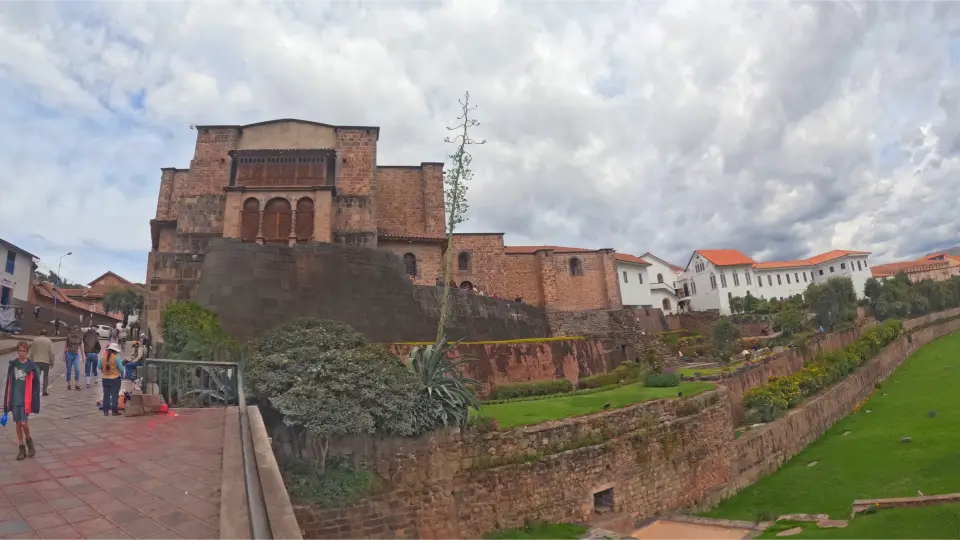
What Does the Name Qoricancha Mean?
The name Qoricancha comes from Quechua: quri means gold, and kancha refers to an enclosure or temple. Over time, the name has been spelled as Qoricancha, Koricancha, or Qurikancha, but all share the same meaning. In Spanish, it translates as “Temple of Gold,” a direct reference to its spiritual and symbolic value.
Did you know?
Qoricancha was also known as Intiqwasi, meaning “House of the Sun.” Inti represents the Sun, and wasi means house. Its walls were once covered with sheets of gold, which the Incas considered the “sweat of the Sun.”
Location
The sacred temple of Qoricancha, also called Coricancha or Qorikancha, is in the historic center of Cusco, Peru, at the intersection of Avenida El Sol and Santo Domingo Street. It is just two blocks from the Main Square (Plaza de Armas), making it easily accessible on foot from most accommodations in the city.
Climate
Cusco’s Andean climate is generally mild, with sunny days and temperatures between 18°C and 25°C (64°F–77°F). Nights are colder, with temperatures dropping to 0°C (32°F).
Cusco has two clearly defined seasons:
- Dry Season (April to October): Sunny days, stable weather, and excellent lighting for sightseeing.
- Rainy Season (November to March): Rain is more frequent, so proper gear is recommended. Fewer tourists visit during this time, allowing for a more relaxed experience.
Best Time of Year to Visit
The best time to visit Qoricancha is during the dry season, from May to October, when weather conditions are stable and ideal for exploration. This period also allows visitors to comfortably explore nearby attractions, enhancing the overall experience in Cusco.
Best Time of Day to Visit
I recommend visiting early in the morning or late in the afternoon, when visitor numbers are lower. These times offer a calmer atmosphere, better opportunities to appreciate each space, and ideal conditions for photography without large crowds.
How to Get to the Temple of Qoricancha
To visit Qoricancha, first arrive in Cusco, the former capital of the Inca Empire. From there, access is easy and varied.
- By Taxi from Cusco International Airport
From Alejandro Velasco Astete International Airport, a taxi ride to Avenida El Sol takes about 15–20 minutes, depending on traffic and season.
- By Bus or Shared Transport
Public buses and colectivos depart from stops near the airport. Lines such as Correcaminos, Liebre, C-4M, and Dorado reach the city center in about 20–25 minutes at an affordable cost.
- Walking Routes (Two Options)
Route 1:
From Cusco’s Main Square, walk along Mantas Street, then descend two blocks to Rosario Bridge, where it intersects with Santo Domingo Street. From here, you can see Qoricancha, making the walk pleasant and intuitive.
Route 2:
From the Main Square, walk along Loreto Street (also known as Intiqhicllu), passing the Acllahuasi, then continue to Maruri Street and Pampa del Castillo, which leads directly to Qoricancha. This walk takes about 10–15 minutes at a relaxed pace.
History of Qoricancha
Pre-Inca Period
Before the rise of the Incas, between 1000 BC and 1400 BC, early settlements existed in the Qosqo Valley. These communities had a ceremonial center called Chumbichuncha, marked by simple structures. The Sahuasiray and Killke ethnic groups occupied and venerated this sacred site. Rituals and sacrifices honored an anthropomorphic deity with a fearsome appearance, reflecting early Andean religious beliefs.
Inca Period
After Manco Cápac, the first Inca, arrived in Cusco seeking fertile land, he found local tribes worshiping a fearsome idol. He confiscated the idol and established the worship of Inti (Viracocha), creator of the sun, stars, and all life. The site was renamed Inti Pampa, or Land of the Sun, also known as Pachayachachipacuwasin. Manco Cápac commissioned a gold plate and ordered gold and molten metal sheets to be placed along the temple’s perimeter.
Manco Cápac and the Birth of Qoricancha
Stone dwellings with thatched roofs were built on this sacred ground, where Manco Cápac lived with his four wives. He named the site “Curiacanche.” Construction of the Temple of the Sun soon followed, marking a pivotal moment in Cusco’s history. Manco Cápac also planted seeds on the surrounding terraces, brought from the cave of Pacaritambo, further establishing the site as the main sanctuary dedicated to Inti, the Sun God.
The Transformation of Qoricancha
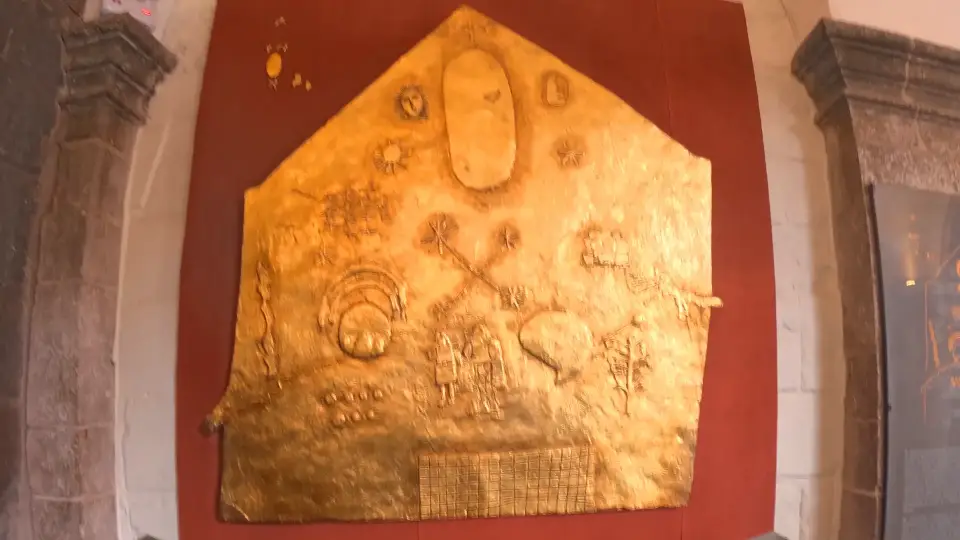
Later, Mayta Cápac, great-grandson of Manco Cápac, constructed stone structures with ceremonial courtyards (canchas) dedicated to Inti. The complex was renamed Intikancha, marking a new stage of development. He replaced the original gold plate with a central oval gold disk representing the god Viracocha, which was placed on the main altar for veneration.
The Splendor of Qoricancha
During the reign of Inca Yupanqui, Qoricancha reached new levels of wealth and magnificence. He adorned the House of the Sun and the residence of the Chosen Virgins (Acllas) with ceremonial ornaments. Later, he replaced the solar disk with the sacred effigy of the Sun known as Punchao, represented as a one-year-old child crafted from solid gold. Goldsmiths from Salluu Uma, five leagues from Cusco, created this image in a month during a period of fasting and important rituals.
Qoricancha at Its Peak
In 1438, Inca Pachacútec rebuilt the Temple of the Sun, redecorating its chambers with gold sheets and precious stones. He replaced the oval disk with a round golden plate adorned with rays, and the site became officially known as Qoricancha, the Temple of Gold. The temple then came under the domain of Hurin Qosqo, marking a new chapter in its history.
Qoricancha as the Center of the Ceque System
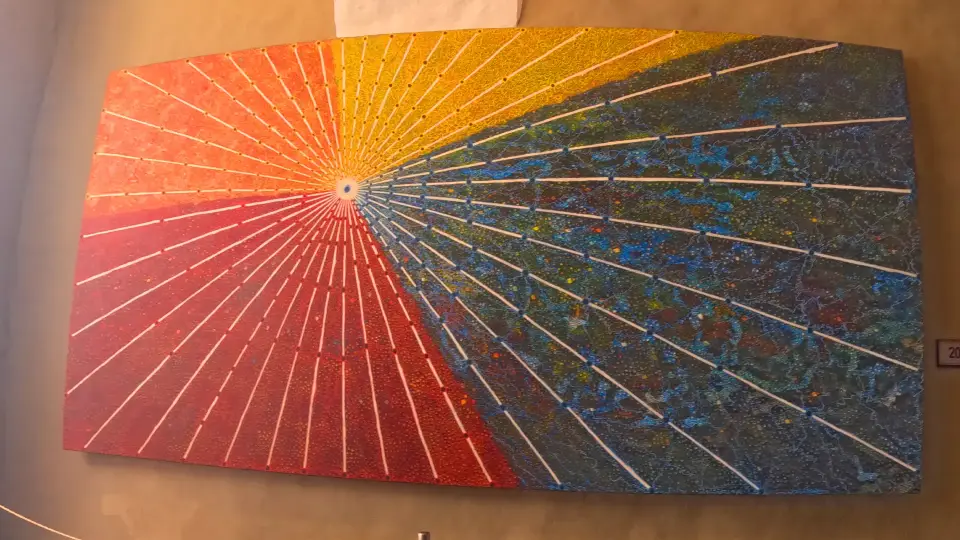
Qoricancha was the central axis of the Ceque system, which consisted of 42 lines connecting 328 huacas (sacred sites) across the territory. This system organized water distribution, regulated the astronomical calendar, and linked tambos (rest stops) and villages to Cusco, which was considered sacred in the Andean world.
Important Fact:
At the center stood the oval image of Viracocha, known as Illa Tec (the creator god). Opposite was the representation of Inti, the Sun, and on another side, the image of the Moon. This arrangement reflects the deeply rooted Andean sacred trilogy.
Colonial Period
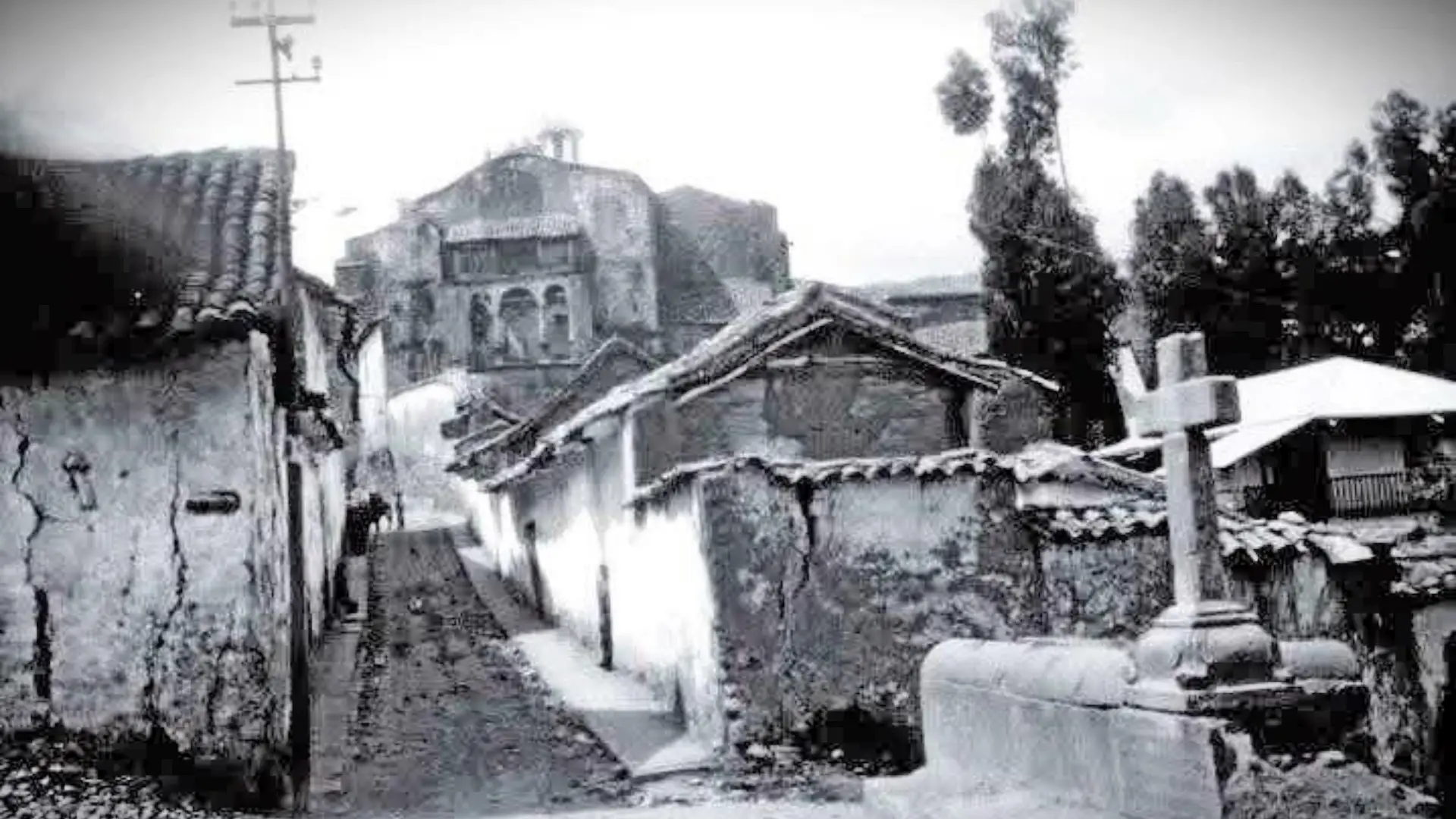
After the Spanish arrived in the 16th century, Qoricancha was desecrated and almost completely looted for its treasures. Gold was melted down, and many artifacts were sent to Spain. The temple walls were demolished to their foundations in an effort to erase Inca religious beliefs.

Qoricancha as Part of Atahualpa’s Ransom
Between 1553 and 1554, the temple was further looted as part of Atahualpa’s ransom, with gold and silver from across Tahuantinsuyo transported to Cajamarca.
Redistribution of Land and a New Purpose
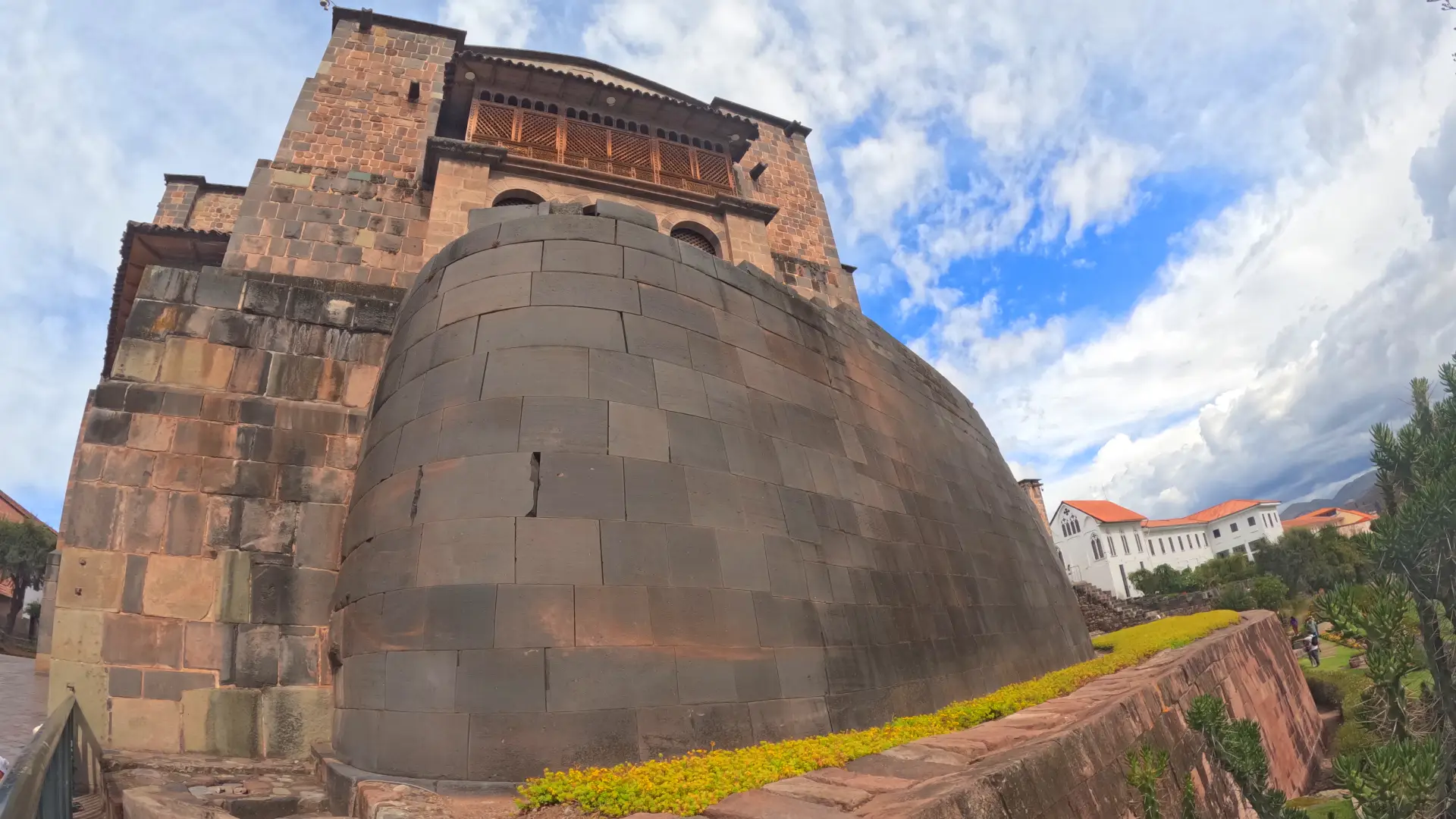
During the 1533 land distribution, the Temple of the Sun was granted to Juan Pizarro, brother of Francisco Pizarro. He later gave it to the Dominican Order to build a Christian church. Eighteen Dominican friars from Santa Cruz, Mexico, led by Father Juan de Olias, began constructing the Church and Convent of Santo Domingo atop the Inca sanctuary, reusing several original walls.
Did you know?
- In 1538, Cusco’s first bishop, Fray Vicente Valverde, began construction of the Santo Domingo convent. Much of the original Inca structure was replaced with adobe and brick, making it the oldest European-style religious building in South America.
- By 1610, the complex had evolved into a Cusco Baroque (mestizo) style, culminating in its consecration in 1633.
Republican Period
Cusco has experienced numerous earthquakes due to its proximity to the Tambomachay fault. Major quakes in 1560, 1650, 1744, 1749, and especially 1950 caused severe damage. The 1950 earthquake, with a magnitude of 7.0, exposed many original Inca walls.
In 1956, reconstruction began under UNESCO supervision, enabling the preservation and display of Inca structures. By 1975, full restoration and conservation were underway.
Qoricancha Today
Today, Qoricancha serves as an archaeological monument and living museum, where visitors can view original Inca architecture integrated with the active colonial convent. It is included in the Cusco Tourist Ticket and stands as a symbol of cultural continuity.
Cultural Events and Festivities
Inti Raymi
The Festival of the Sun (Inti Raymi) begins at Qoricancha every June 21, coinciding with the Andean winter solstice. Established by Inca Pachacútec around 1430, this ceremony remains one of Cusco’s most significant cultural celebrations.

Qhapaq Raymi
During Inca times, Qoricancha hosted Qhapaq Raymi, celebrated on December 22 at the summer solstice. Ceremonies honored Punchao and the first rays of the sun, which passed through Apu Ausangate and illuminated the temple’s sacred niche, marking the start of the agricultural cycle, Mahuay Tarpuy, the planting season.
Architectural Wonders of Qoricancha
Qoricancha was a major architectural achievement of the Inca Empire, serving as a material expression of Inca philosophy beyond its religious role. Religion and astronomy were closely linked, with rituals and celestial observations integrated into daily life. The temple also functioned as a timekeeping center, where the movements of the Sun and Moon were studied to understand cosmic cycles.

Architectural Significance
Qoricancha was more than a temple; it represented the house of Inti (the Sun) and the spiritual center of the Inca world. When the Incas expanded into new territories, they encouraged building Sun temples modeled after Qoricancha. This practice allowed communities to replicate the sacred essence of Qosqo and maintain a lasting spiritual connection to the ceremonial center.
Construction Techniques
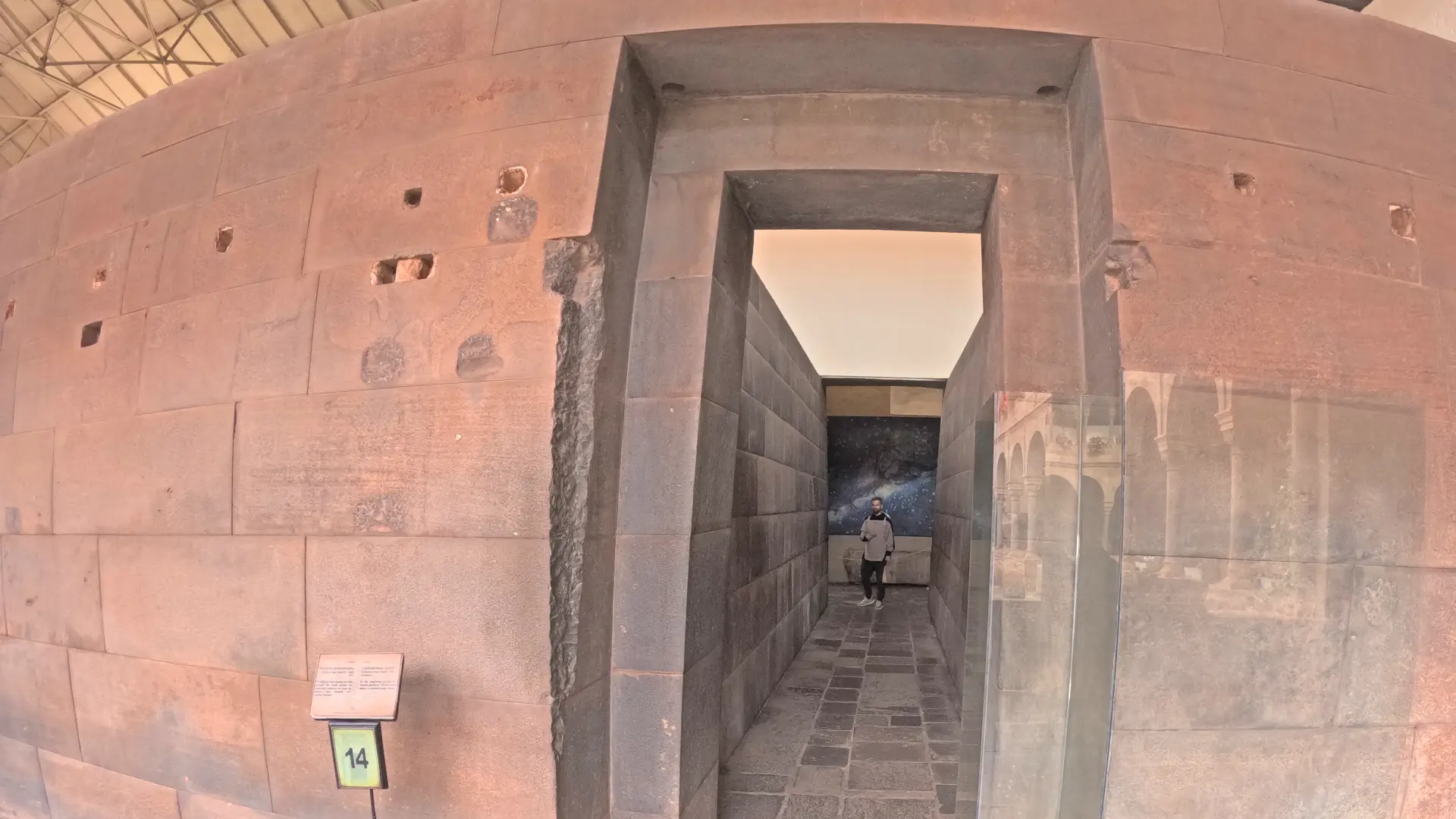
Qoricancha’s architecture demonstrates the Incas’ exceptional stonework skills. The walls were precisely carved and assembled, with roofs supported by wooden beams and covered with straw. The upper walls were once decorated with gold sheets fastened by wooden pegs.
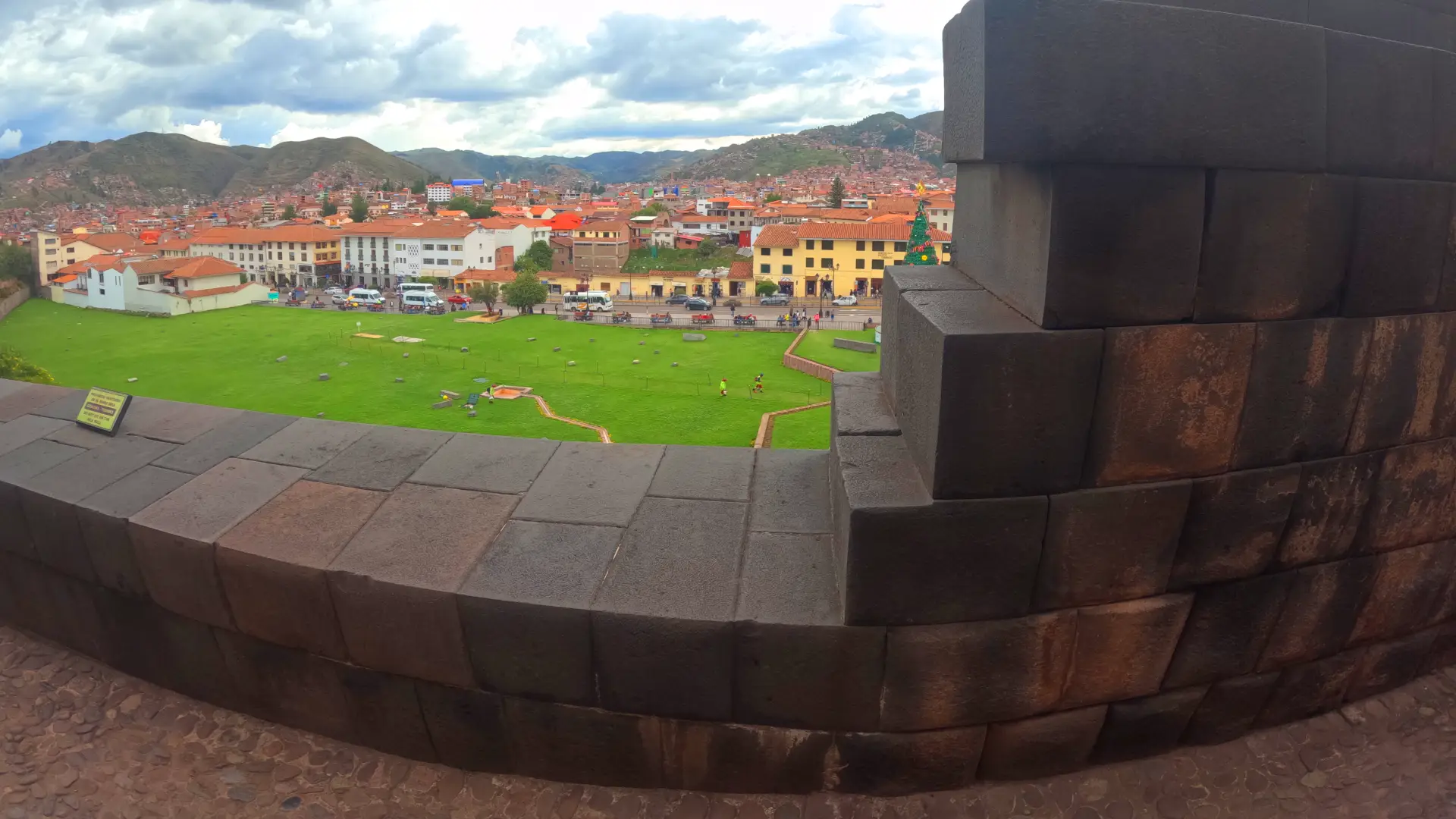
The temple’s walls were constructed from large blocks of calcite, andesite, and green diorite, joined with T-shaped copper clamps and polished so precisely that the joints were nearly invisible. The complex featured a single northern entrance and a curved southwest-facing wall, from which ceque lines extended to connect sacred sites (huacas) across the empire.
How Was the Temple of Qoricancha Organized?
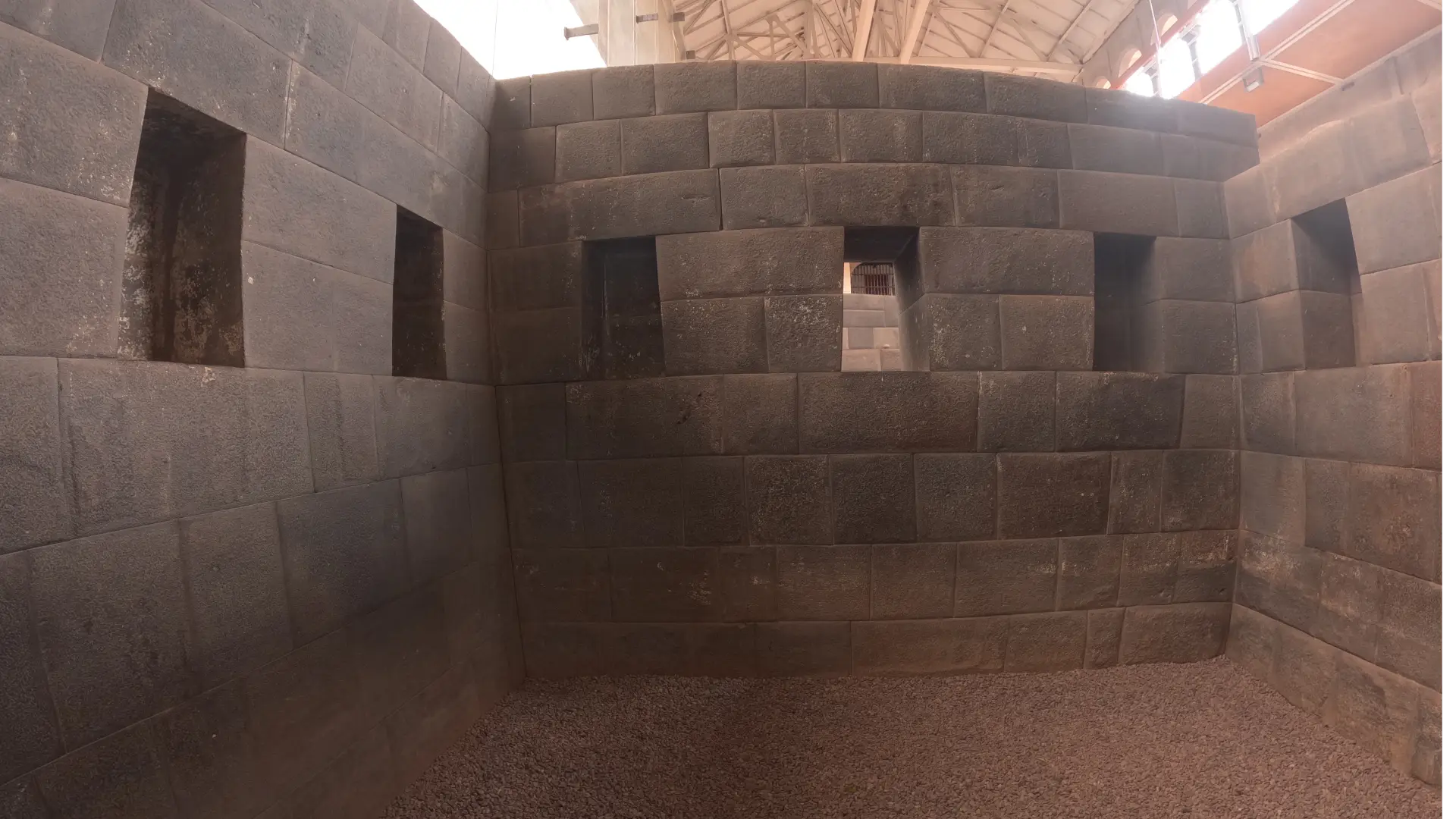
The Qoricancha sanctuary was organized into five distinct spaces, with rooms featuring pyramidal straw-covered roofs. Four chambers on the northeastern side served as reliquaries or chapels. A central chapel dedicated to Inti, the Sun Father, emphasized the sanctuary’s spiritual significance.
Did you know?
The original Qoricancha sanctuary measured about 300 feet wide and over 600 feet long, providing a commanding view of Cusco.
Technological Advancements
Inca culture’s advanced technological knowledge is clearly demonstrated at Qoricancha:
- Architectural Mastery: The Incas demonstrated expertise in stonework, geometry, and astronomy by aligning Qoricancha with key solar events.
- Astronomical Knowledge: The temple’s design and orientation reflect the Incas’ advanced understanding of cosmic cycles.
- Earthquake-Resistant Construction: The slightly inclined placement of stones allowed structures to withstand seismic activity, demonstrating the Incas’ advanced anti-seismic engineering.
- Solar Calendar and Imperial Power: The temple was used to interpret shadows cast by the Sun’s first rays, which were reflected onto Inti’s chapels and read by the high priest to guide religious and political decisions.
Remarkable Features
- Duality: Qoricancha was a sacred space for worshipping both Inti (the Sun) and Pachamama (Mother Earth), reflecting the Inca belief in balance between sky and earth, both vital to agriculture and daily life.
- Spiritual Continuity: From its origins through the colonial period, the temple maintained its sacred character and continued to host spiritual ceremonies.
- Symbolic Architecture: Qoricancha is a powerful example of Inca architecture, reflecting the civilization’s cultural values, social order and advanced construction techniques.
What to See at Qoricancha
Chapels Inside Qoricancha
✔️ Temple of the Moon (Mama Quilla): This temple was dedicated to the Moon, considered the Incas’ protective mother and the Sun’s companion. Its silver-covered walls and doorways reflected its importance. In front of the Moon’s image, the mummies of Inca queens (coyas), including Mama Ocllo, were placed in ceremonial order.
✔️ Temple of the Stars: This chamber honored Chasca, the planet Venus, which was associated with the Moon. Silver star-shaped sheets recreated the night sky, reflecting its role in Andean life and rituals.
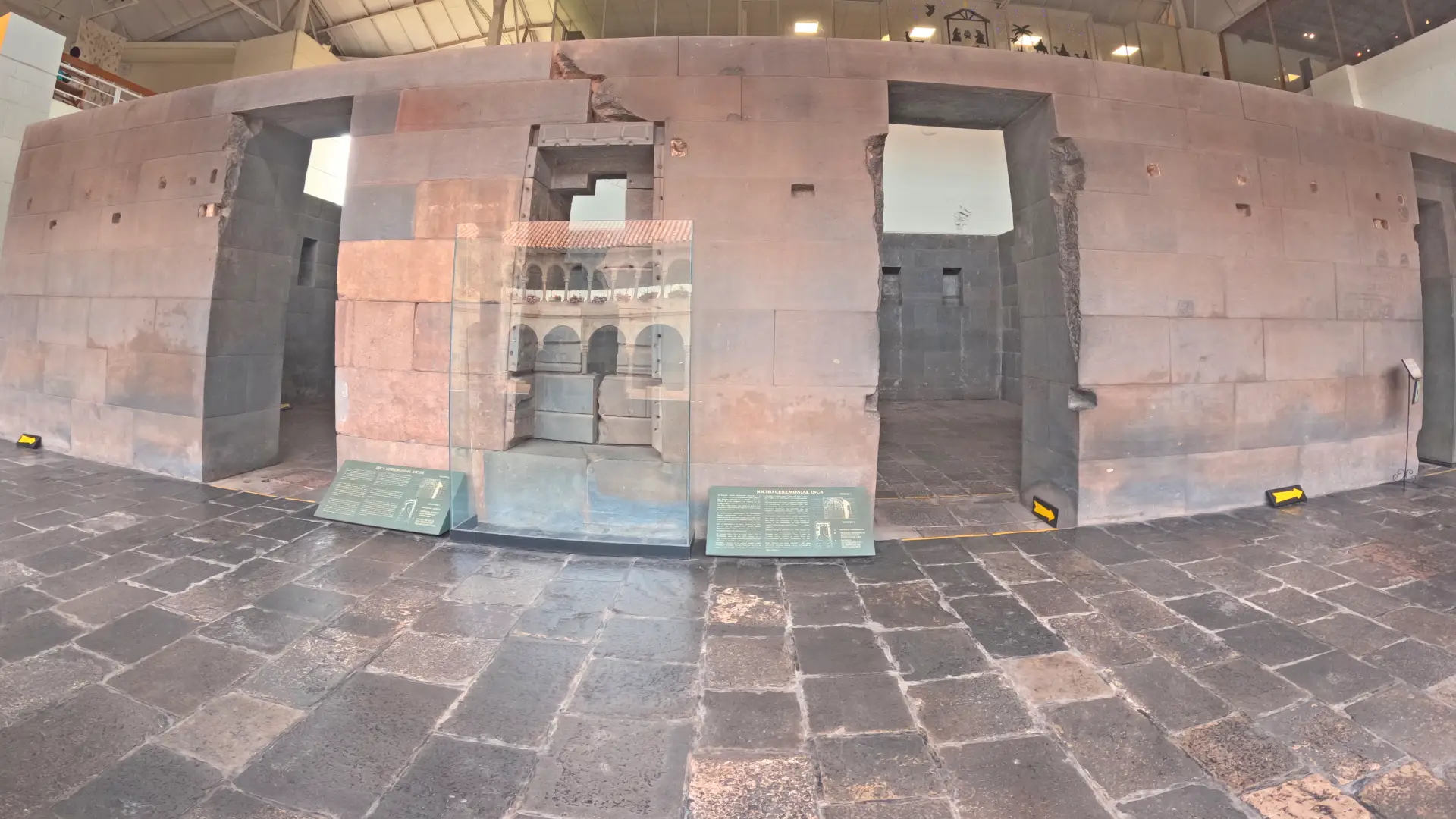
✔️ Temple of Lightning, Thunder and Storm: This temple was dedicated to Illapa, the god of lightning, thunder, and storms, seen as a powerful force serving the Sun. Gold-covered walls symbolized the energy and reverence these phenomena inspired.
✔️ Temple of the Rainbow: This temple was dedicated to Cuychi, regarded as a manifestation of the Sun. A large rainbow once spanned the golden walls, visually connecting the sanctuary.
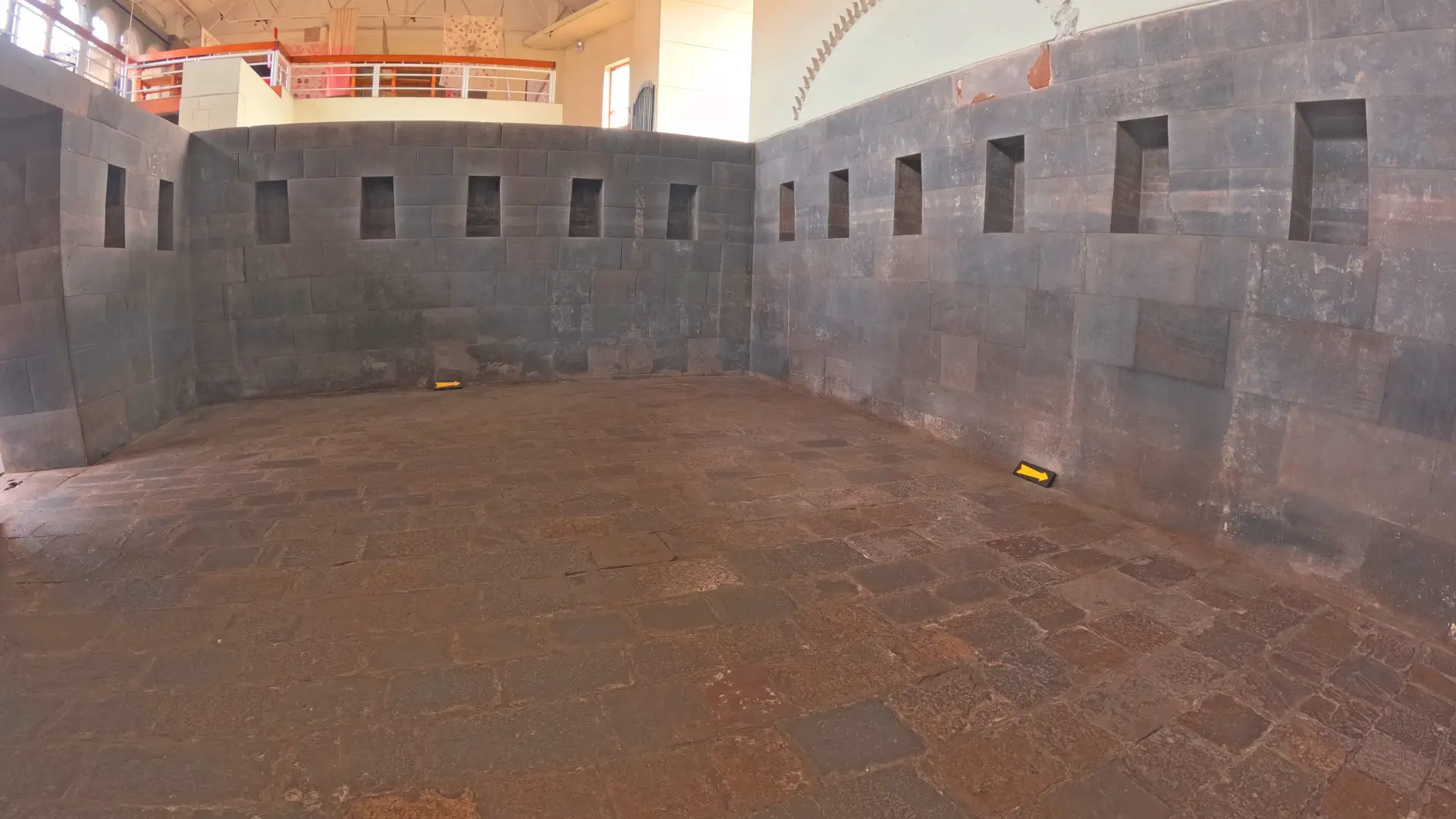
✔️ Temple of the High Priest: This private chamber was reserved for the Huillac-Huma, the high priest, who organized ceremonies and offerings from this space. The room was fully adorned with gold to symbolize his authority.
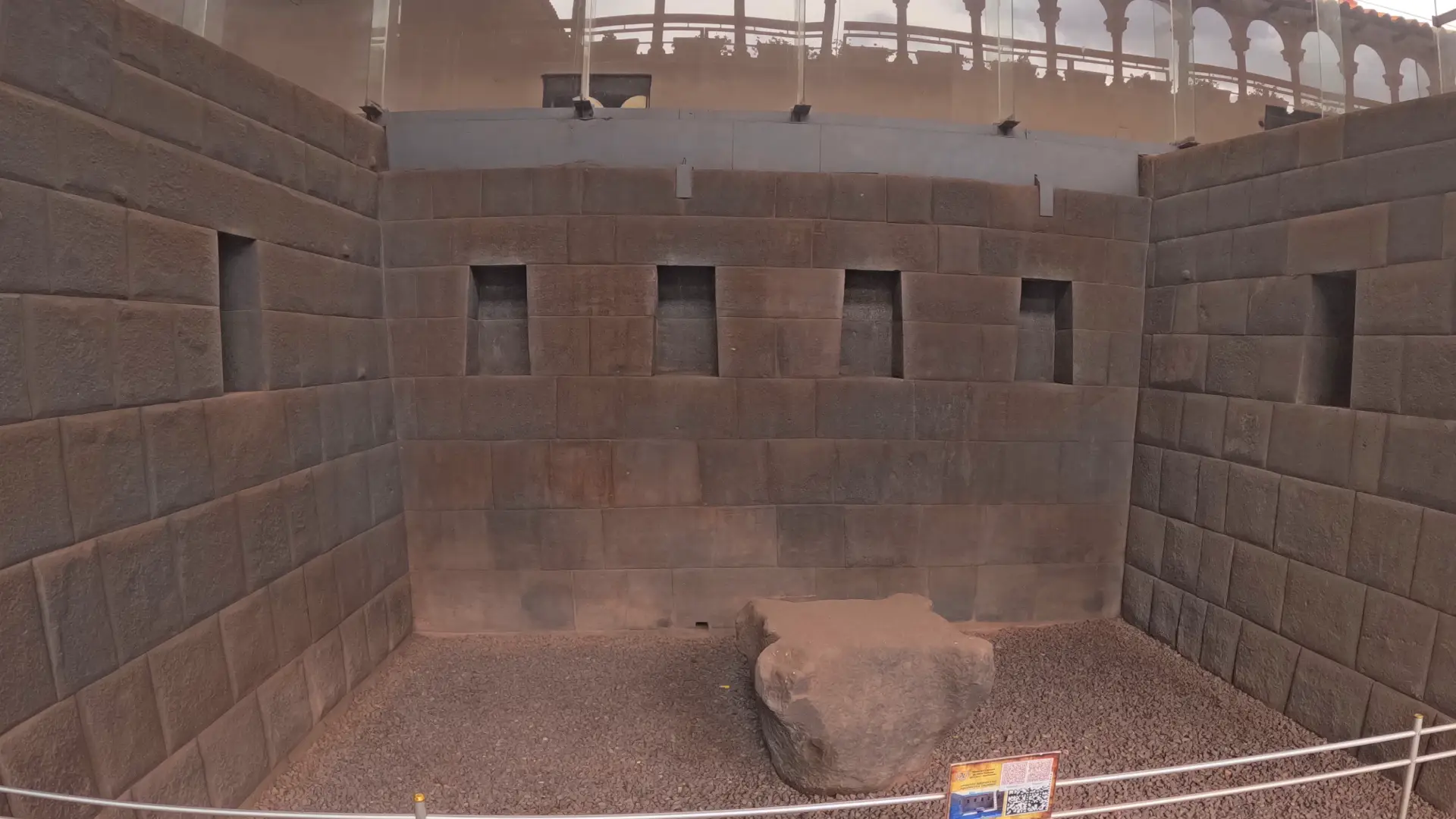
Other Sacred Spaces
✔️ The Cloister: This open area, surrounded by chapels and sacred walls, featured a ceremonial garden with fountains designed for ritual use.
✔️ The Milky Way: Known as Yana Phuyu, the Milky Way was seen as a sacred river in the sky. The Incas identified shapes of animals such as the llama, fox, partridge, toad, and serpent, each linked to ancestral legends.

✔️ Water Fountains: The main courtyard originally contained five ritual fountains with golden spouts and vessels of stone, gold and silver. Today, only two are still visible.
✔️ Garden of Gold and Silver: This garden featured life-sized figures of animals, plants, crops, and fruit trees, all crafted from precious metals.
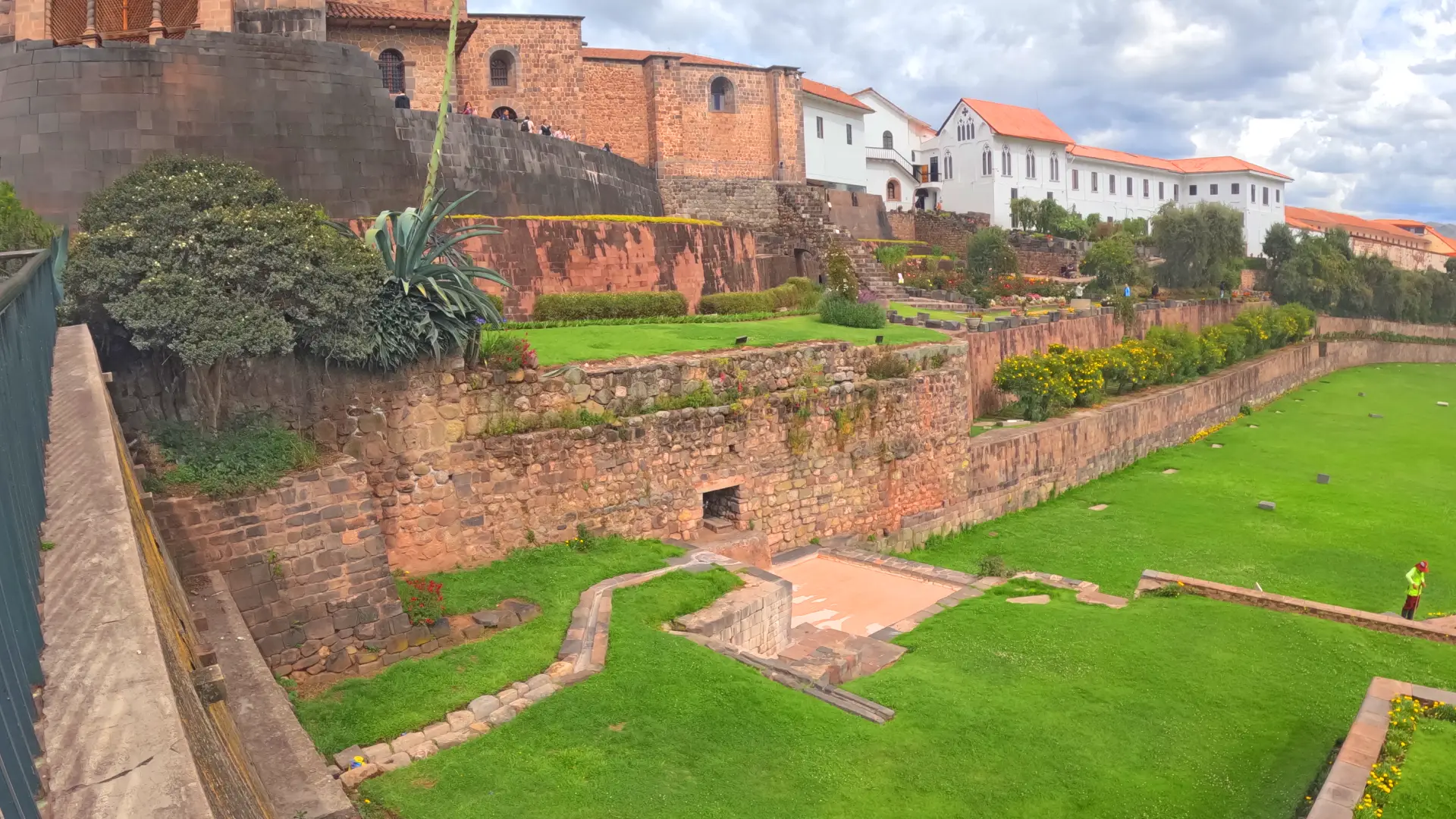
✔️ Terraces: The terraces surrounded the sanctuary and descended toward the ancient Purin Huaylla stream, now called the Huatanay River.
✔️ Remains of the Original Temple: Curved walls, courtyards, and ceremonial gardens remain, offering visitors a sense of the site's former grandeur.

✔️ Convent of Santo Domingo: This colonial structure was built atop Qoricancha. Its cloisters now serve as a museum and a space where Inca and colonial history meet.
Did You Know?
Additional quarters were dedicated to temple servants, privileged Incas who served the god Inti exclusively.
Access to the temple was strictly limited. Only Incas could enter, regardless of rank and women were not permitted, even if they were related to the Sapa Inca.
Nearby Attractions Around Qoricancha
This area encourages visitors to experience Cusco at a relaxed pace, focusing on short, easy routes that offer memorable and enjoyable moments.
Key Stops Along This Route:
✔️ Qoricancha Site Museum: Features five exhibition rooms that present pre-Inca, Inca, and colonial history through artifacts found within the temple.
✔️ Church of Santo Domingo: Built atop Inca walls, this church exemplifies the coexistence of Inca and colonial architecture in one location.
✔️ Palace of Inca Kusicancha: Located one block from Qoricancha, this site preserves remains related to the preparation of sacred chicha and offers free admission.
✔️ Qosqo Center of Native Art: A vibrant venue featuring traditional music and dance performances that highlight Cusco’s living cultural heritage.
✔️ Cusco Main Square (Plaza de Armas): Framed by the Cathedral, the Church of the Society of Jesus, and historic buildings that display diverse artistic styles.
✔️ The Twelve-Angle Stone: An outstanding example of Inca stonework, located on Hatun Rumiyoc Street.
✔️ San Blas Neighborhood: Known for its bohemian atmosphere, cobblestone streets, and artisan workshops that preserve traditional techniques.
✔️ Sapantiana Aqueduct: A 17th-century colonial structure near an ancient Inca huaca, ideal for a quiet and scenic pause.
✔️ San Pedro Market: An excellent place to sample local cuisine and purchase souvenirs at reasonable prices.
✔️ Inka Museum: Houses ceramics, textiles, metals, and mummies that offer insight into the pre-Hispanic Andean world.
✔️ Museum of Pre-Columbian Art: Displays gold and silver pieces from various Andean cultures.
✔️ Casa Concha – Machu Picchu Museum: Exhibits objects recovered during the initial archaeological investigations of Machu Picchu.
✔️ Casa Garcilaso Museum: Presents Cusco’s evolution from its earliest inhabitants through the colonial era.
✔️ Sacsayhuamán: A monumental archaeological complex associated with the Sun, known for its massive stone walls and strong connection to the sacred city of Cusco.
This route invites you to discover Cusco in a relaxed and intimate way, connecting temples, neighborhoods, museums, and viewpoints for an experience best enjoyed at a leisurely pace, leaving you eager to explore further.
Practical Information for Travelers
Opening Hours
Qoricancha is open to visitors daily in the morning and afternoon. Hours may change during religious holidays, so please check in advance before your visit.
Opening Hours | |
Monday to Saturday | from 8:30 am to 5:30 pm |
Sundays | from 9:00 am to 12:00 pm / 14:00 to 17: 00 pm |
Entrance
Coricancha is not included in the Cusco Tourist Ticket (BTC) or the Religious Circuit, which covers several major historical sites. You may visit Coricancha separately and explore at your own pace to suit your schedule.
Coricancha Entrance Fees | |
Foreign adults: USD 7 | Foreign university students: USD 5 |
Peruvian nationals: S/ 20 | Peruvian university students: S/ 12 |
Important Information
- Access to the bell tower of the convent has an additional cost of S/ 5.00 soles.
- Free entry for Cusco residents, upon presentation of a valid Peruvian ID (DNI).
Where to Buy Coricancha Entrance Tickets
✔️ Authorized travel agencies: Tickets are available through any authorized travel agency. We can also assist with planning your visit, organizing tours in Cusco and nearby areas, and ensuring a well-organized experience. Contact us to create a personalized itinerary.
✔️ On-site purchase: Tickets can also be purchased directly at the entrance of Coricancha.
Recommended Visit Duration
Plan to spend 1 to 2 hours exploring the archaeological site and the colonial convent, depending on your interest in history.
Tips for Visiting Coricancha
- Bring water and your camera, as the site offers many opportunities for photography.
- Arrive early to enjoy a quieter visit and take advantage of better natural light for photography.
- Always respect posted signs and heritage conservation rules.
- Ensure your camera or phone is fully charged before your visit.
- Familiarizing yourself with Inca astronomy before your visit will enhance your experience.
- Avoid restricted areas and help protect every part of the site.
- Consider visiting other nearby archaeological sites during your trip.
Safety Tips
- Avoid touching the Inca walls to help preserve them.
- Plan your visit in advance to make the most of your time.
- Stay alert to potential tourist scams and choose reliable agencies.
- Follow all instructions provided by staff and security personnel.
- Pay attention to entrances and exits within the complex.
Curiosities and Lesser-Known Facts
Legend of the God Inti or Punchaw
According to tradition, while Pachacútec was traveling to visit his father, he stopped in the Kallachaka basin, now known as Inkilltambo, and fell asleep beside the Susurpukio spring. As he rested, the Sun God appeared in a dream, foretold his victory over the Chancas and requested that he honor the Sun by building a temple.
Upon waking, Pachacútec found a mirror beside him, believed to grant the ability to see the future. He carried it from that day forward. With renewed conviction, he promoted Sun worship and continued building the Qoricancha, establishing it as the Inca Empire’s most sacred temple.

Punchaw as a Sacred Symbol
The idol of Punchaw was the most revered solar figure in the Qoricancha, safeguarding the ashes of Inca rulers’ hearts and receiving continual honors in the name of Viracocha, protector during the conflict against the Chancas. After appearing in a dream to Inca Yupanqui, the ruler ordered the idol placed on a finely crafted wooden altar, richly decorated with bird feathers. A golden brazier stood before it, where offerings of maize, birds, and chicha were made to nourish the Sun. This ritual strengthened devotion to Punchaw as the living presence of Viracocha on Earth.
How Was the God Punchaw Dressed?
The idol was dressed in finely woven tunics of gold and wool. It wore a borla, a royal tassel symbolizing Inca rank, and golden uxutas (sandals), with the soles always uncovered. After the Spanish arrived, Manco Inca took the statue of Punchaw to Vilcabamba, but it was later found by the conquistadors during the capture of Túpac Amaru Inca I, marking the statue’s final fate.
Important Fact
The mummies of Inca kings were placed on either side of the Sun’s image, with Huayna Cápac’s mummy directly in front. Idols and mummies from conquered peoples were also displayed as symbols of Inca power and dominance.
Lesser-Known Facts
It is believed that underground tunnels, called chincanas, once connected the Qoricancha with other sacred sites such as Sacsayhuamán. These accounts appear in both ancient chronicles and local oral traditions. Archaeologists continue to investigate these claims, maintaining interest in the mysteries beneath Cusco.
"If you have visited the Qoricancha Temple, please share your experience in the comments and let us know what impressed you most. If you would like to learn more about Inca history or explore lesser-known routes around Cusco, I am available to help you plan your next visit. Continue exploring our guides to enjoy an authentic and memorable stay"
Frequently Asked Questions
How were the stones of the Qoricancha held together?
The construction of the Qoricancha used T-shaped bronze clamps to join stone blocks, giving the structure strength and stability.
What is Qoricancha and why was it so important?
Qoricancha, also spelled Qorikancha or Korikancha, was the most sacred temple of the Tahuantinsuyo (Inca Empire), dedicated mainly to the Sun god, Inti. It also had sanctuaries for other solar, lunar, and astral deities. At its height, the temple was covered with gold sheets and decorated with figures and ornaments made of precious metals, symbolizing the sweat of the Sun.
Were there other temples besides Qoricancha?
Yes. Qoricancha was the main ceremonial center of the Tahuantinsuyo, dedicated to the god Inti (the Sun). It also had secondary temples for the Moon, the stars, lightning, and other key deities of the Andean pantheon.
Why was it called Qoricancha?
The temple was first known as Curiacanche, meaning Enclosure of Gold. In the Inca period, it became Qoricancha, the Temple of the Sun. Today, it is part of the Dominican monastery built on the original Inca foundations.