

18 Things You Cannot Do on the Inca Trail
You cannot enter the Inca Trail without the required authorization, leave the approved route, light campfires, damage archaeological sites, disturb wildlife, or camp outside your assigned area. Article 26 of the Inca Trail Network regulations sets out 18 prohibited activities and behaviors, including restrictions for travelers and responsibilities for operators and guides.
The following explanations distinguish conduct expected of a visitor from operational rules governing registered groups. They apply within the protected Inca Trail Network, including the Short and Classic Inca Trail routes.
Table of Contents
- Why Are Certain Activities Prohibited on the Inca Trail?
- 18 Things You Are Not Allowed to Do on the Inca Trail
- 1. Entering the Inca Trail Without an Authorized Tour Operator
- 2. Walking Along Railway Tracks or Using Unauthorized Routes
- 3. Entry of Minors Without Required Authorization
- 4. Altering or Contaminating the Natural or Cultural Landscape
- 5. Camping or Staying Overnight Outside the Assigned Campsite
- 6. Bringing In or Using Items That Threaten Cultural or Natural Heritage
- 7. Making Campfires Along the Inca Trail
- 8. Climbing Archaeological Walls or Marking Historic Structures
- 9. Making Graffiti
- 10. Disturbing or Altering Wild Plants and Animals
- 11. Conducting Unauthorized Flights Over the Inca Trail
- 12. Eating Inside Archaeological Monuments
- 13. Placing Political or Commercial Advertisements
- 14. Traveling or Working Under the Influence of Alcohol or Drugs
- 15. Entering or Using Motorized Vehicles
- 16. Transferring Tourists from One Group to Another
- 17. Tour Guides Must Not Abandon Their Groups
- 18. Engaging in Obscene Acts Contrary to Public Decency
- Important Things to Know Before Booking Your Inca Trail Trek
- Book Through an Officially Authorized Tour Operator
- Secure Your Permits in Advance
- Follow Your Guide's Instructions
- Respect Archaeological Sites
- Protect the Natural Environment
- Prepare for Mountain Conditions
- Why Choose an Authorized Local Tour Operator in Cusco?
- How Qoricancha Expeditions Promotes Responsible Tourism on the Inca Trail
- Preparing Our Travelers Before the Hike
- Training Our Guides, Porters, and Trekking Cooks
- Our Commitment as a Local Tour Operator
- Explore the Inca Trail with Qoricancha Expeditions
- Short Inca Trail 2 Days and 1 Night
- Classic Inca Trail 4 Days and 3 Nights
Why Are Certain Activities Prohibited on the Inca Trail?
The restrictions protect archaeological structures, natural habitats, and people using the route. A shortcut can damage vegetation or an archaeological surface; an open fire can affect a much larger area than the campsite where it starts.
Other provisions support visitor control. Registered groups, assigned campsites, and guide supervision allow staff to check who is on the trail and which arrangements have been authorized.
18 Things You Are Not Allowed to Do on the Inca Trail
These sections explain the 18 provisions in Article 26. They do not replace additional access conditions, equipment restrictions, or instructions issued for a particular site.
1. Entering the Inca Trail Without an Authorized Tour Operator
You cannot arrive at an Inca Trail checkpoint and begin an independent hike. Your entry must be arranged through an operator authorized for the route, with the required ticket and registration.
Confirm the company handling your trek and the departure registered for you. A tour advertisement or payment receipt alone does not confirm that official entry arrangements have been completed.
2. Walking Along Railway Tracks or Using Unauthorized Routes
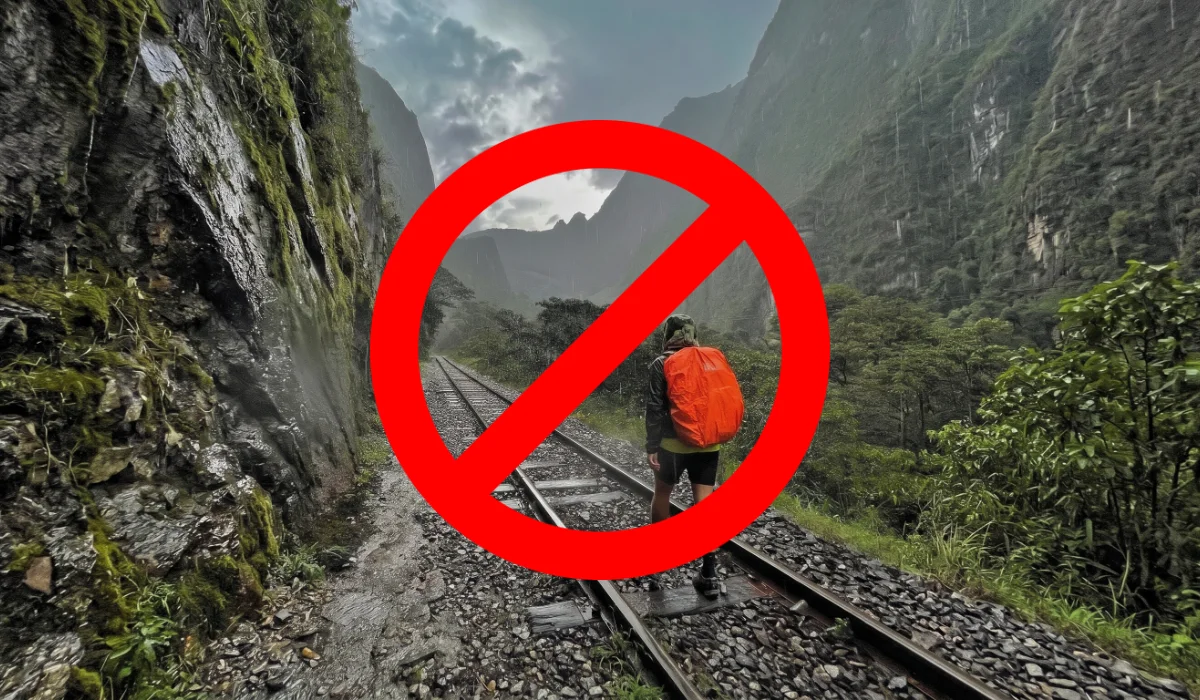
Do not walk along the railway or use unauthorized paths within the regulated network. Train tracks are not an alternative hiking route, and a shortcut does not become permitted because it reconnects with the trail.
Follow the route indicated by your guide. If a path is closed or blocked, wait for an authorized response rather than choosing your own detour.
3. Entry of Minors Without Required Authorization
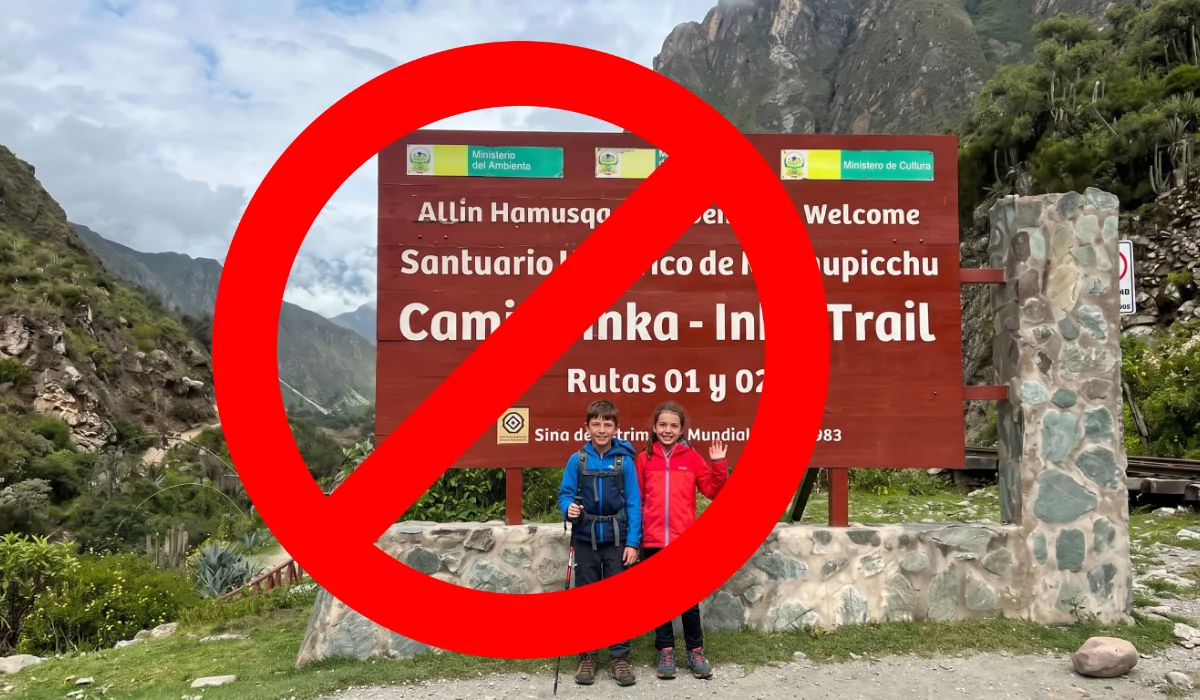
Children must be included in the authorized entry arrangements. Article 26 specifically addresses minors who are not listed in the required annex, as well as relatives of guides or support staff.
Being accompanied by a parent or related to a crew member does not provide automatic access. If a child is joining your booking, have the operator confirm the required registration and documentation before departure.
4. Altering or Contaminating the Natural or Cultural Landscape
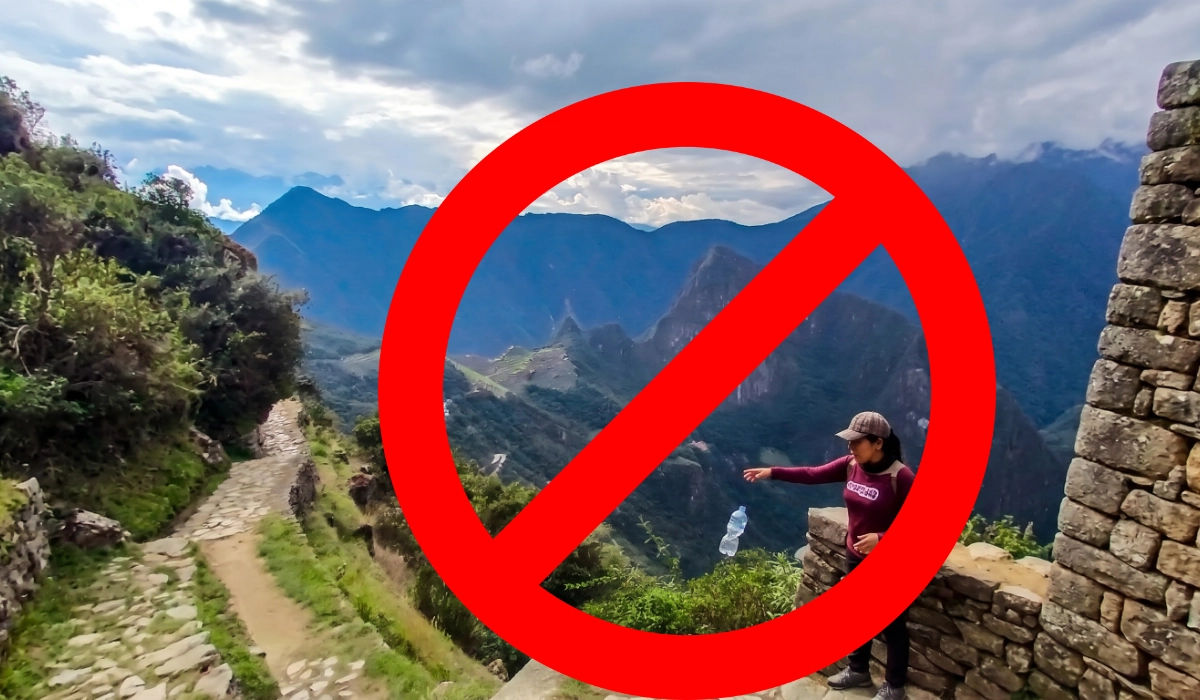
Do not damage, alter, or contaminate the landscape or archaeological monuments. This includes moving stones, removing plants, leaving waste, or clearing vegetation to create a photo location.
Leave natural and archaeological materials where they are. If you notice something that appears damaged or out of place, tell your guide instead of attempting to restore or rearrange it.
5. Camping or Staying Overnight Outside the Assigned Campsite
Sleep only in the campsite assigned to your group. The regulation allows an exception for a force majeure situation only after a determination by the responsible ranger or security personnel.
A better view, quieter location, or change in walking preference is not grounds for travelers to choose another camp. Your trekking team must follow the authorized arrangements.
6. Bringing In or Using Items That Threaten Cultural or Natural Heritage
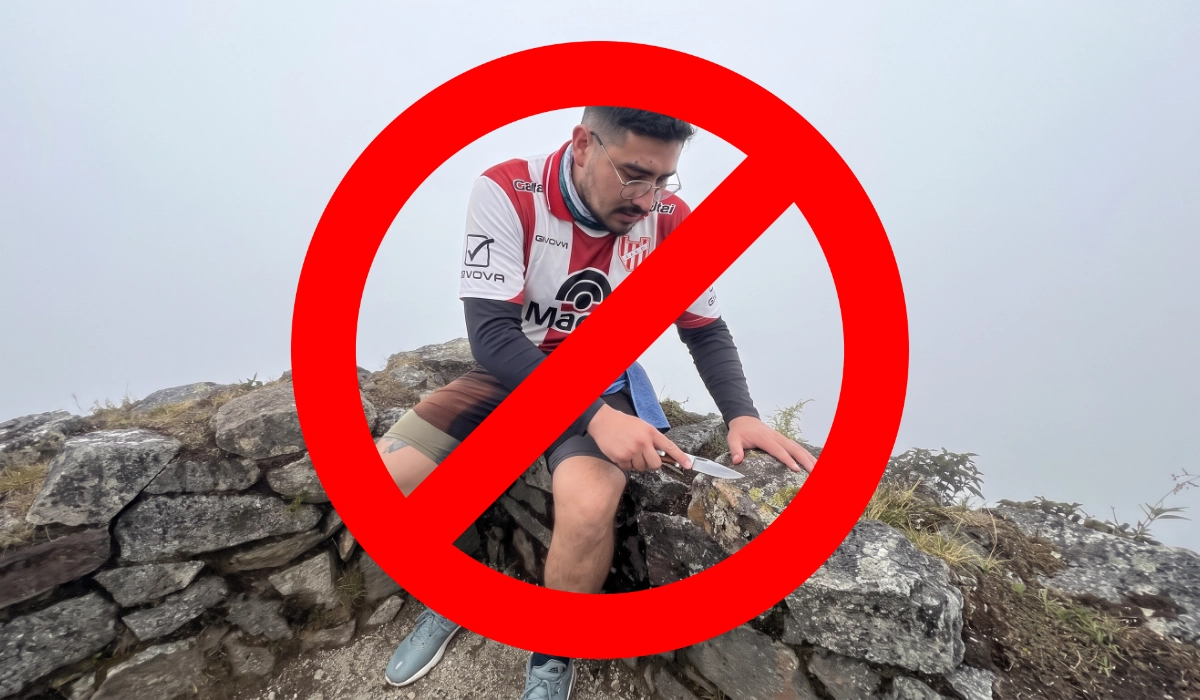
Do not bring or use objects that threaten natural heritage, cultural heritage, or public facilities. This is a general protection rule in addition to the specific items listed in Article 27.
Equipment should not scrape, stain, attach to, or otherwise damage archaeological surfaces. Ask your operator about specialized equipment before departure if its use could affect the site or other visitors.
7. Making Campfires Along the Inca Trail
Campfires are prohibited on the trail, at archaeological monuments, and in the surrounding natural areas. This includes a small fire for warmth at a campsite.
Follow your trekking team's meal arrangements and use the clothing and sleeping equipment appropriate for your itinerary. Do not collect wood or light an open fire as an alternative to the camp kitchen.
8. Climbing Archaeological Walls or Marking Historic Structures
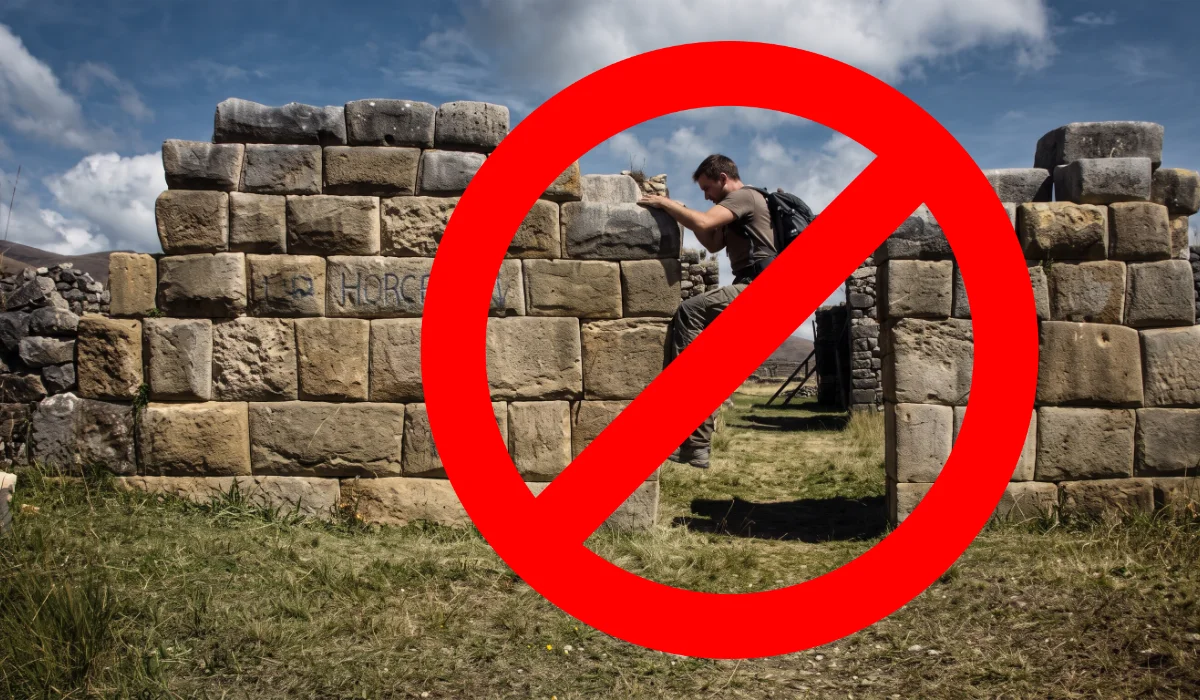
Do not climb walls, mark earthen floors, or scratch archaeological structures. A wall that looks solid may still be a protected surface that visitors are not allowed to stand on.
Take photographs from permitted visitor areas. Do not step onto a structure, balance equipment on it, or carve a name into stone.
9. Making Graffiti
Graffiti is prohibited throughout the network. Do not write, draw, paint, or carve messages on rocks, walls, signs, or campsite facilities.
This also applies to a small inscription intended as a souvenir. Photograph a place without adding a mark to it.
10. Disturbing or Altering Wild Plants and Animals
Do not disturb wildlife or damage wild plants. Leave flowers, branches, and other natural materials in place, and avoid actions that change an animal's behavior.
- Do not feed, chase, capture, or handle wild animals.
- Do not move vegetation to improve a photograph.
- Do not collect flowers or plant specimens.
- Keep your distance and follow your guide's directions when wildlife is nearby.
11. Conducting Unauthorized Flights Over the Inca Trail
Flights over the Inca Trail Network require prior authorization from the competent Culture and SERNANP authorities. A personal drone is not exempt because the footage is for private use.
Arrange any required permissions before bringing or operating aerial equipment. A guide's agreement or an operator's booking confirmation does not substitute for official authorization.
12. Eating Inside Archaeological Monuments
Article 26 prohibits eating inside archaeological monuments. Meals and snacks during the trek must be taken in locations where they are permitted, as directed by your guide.
This clause does not establish a general ban on drinking water along the Inca Trail. Follow any site-specific instructions about food, beverages, and where the group may stop.
13. Placing Political or Commercial Advertisements
Do not place political or commercial advertisements within the Inca Trail Network. This includes attaching promotional signs to structures or vegetation and setting up advertising displays along the route.
Operators and visitors must respect the same protected setting. Do not assume a commercial booking authorizes banners or promotional installations at an archaeological site.
14. Traveling or Working Under the Influence of Alcohol or Drugs

Hiking or working while intoxicated or under the influence of other drugs is prohibited. The provision applies to visitors and personnel carrying out duties on the trail.
Alcoholic beverages are also listed among prohibited items in Article 27. Do not bring alcohol for the campsite or begin a hiking day while impaired.
15. Entering or Using Motorized Vehicles
Motorized vehicles cannot enter or travel along the Inca Trail Network. A motorcycle or quad bike cannot be used to replace a walking section of your itinerary.
Vehicle transfers included in an organized tour take place outside the protected hiking route, using the relevant authorized roads and transport services.
16. Transferring Tourists from One Group to Another
Visitors cannot be transferred informally between registered trekking groups. The 2026 booking amendment also states that groups cannot be consolidated after entering the network, whether they belong to the same agency or different agencies.
Stay with your registered group. If an emergency or another problem affects your participation, your guide and operator must coordinate the appropriate response with the authorities rather than simply moving you into another group.
17. Tour Guides Must Not Abandon Their Groups
Guides must not abandon the visitors under their supervision. This is an operational responsibility, not a rule requiring every hiker to walk at exactly the same speed.
Your guide should explain how the group will be supervised during walking sections and stops. If someone needs assistance, follow the coordinated response rather than leaving the route or changing groups on your own.
18. Engaging in Obscene Acts Contrary to Public Decency
The regulation prohibits obscene acts contrary to public decency. Conduct must be appropriate for shared campsites, visitor paths, and protected archaeological places.
Respect other people using the route and follow staff instructions if behavior is causing a problem.
Important Things to Know Before Booking Your Inca Trail Trek
Before confirming a trek, establish who will operate it, how entry will be registered, and what your itinerary requires. These checks help distinguish the official access arrangements from the commercial services in your package.
Book Through an Officially Authorized Tour Operator
Ask which company holds the authorization to operate your Inca Trail departure. Confirm that the authorization applies to the relevant operating period and that the company named in your arrangements is the one responsible for the trek.
Secure Your Permits in Advance
Entry is capacity-controlled. Confirm that your operator has completed the official ticket arrangements for your name, route, and date. Submit accurate identification details when requested; do not treat a tour deposit as proof that an entry ticket has been issued.
Follow Your Guide's Instructions
Review checkpoint procedures, rest locations, and group supervision at the briefing. During the trek, ask your guide before entering a side path, stopping inside a monument, or changing the group's agreed arrangements.
Respect Archaeological Sites
Use the visitor paths and keep equipment off protected surfaces. A photograph does not justify climbing a wall, crossing a barrier, or moving an archaeological object.
Protect the Natural Environment
Keep food and waste contained, leave plants undisturbed, and observe wildlife without feeding or approaching it. Follow the crew's waste collection system throughout the trek.
Prepare for Mountain Conditions
Review the route's physical demands and equipment requirements with your operator. This preparation should also explain what happens if weather or trail conditions require an official change.
Why Choose an Authorized Local Tour Operator in Cusco?
An authorized operator is responsible for arranging regulated access and coordinating the registered group. Compare how clearly a company explains permits, supervision, campsite arrangements, and the services included in your booking.
Qoricancha Expeditions is based in Cusco and organizes treks to Machu Picchu. Our Inca Trail operating authorization number is 000297-2026. Ask our team for the documentation relevant to your departure and the details of the services you are booking.
How Qoricancha Expeditions Promotes Responsible Tourism on the Inca Trail
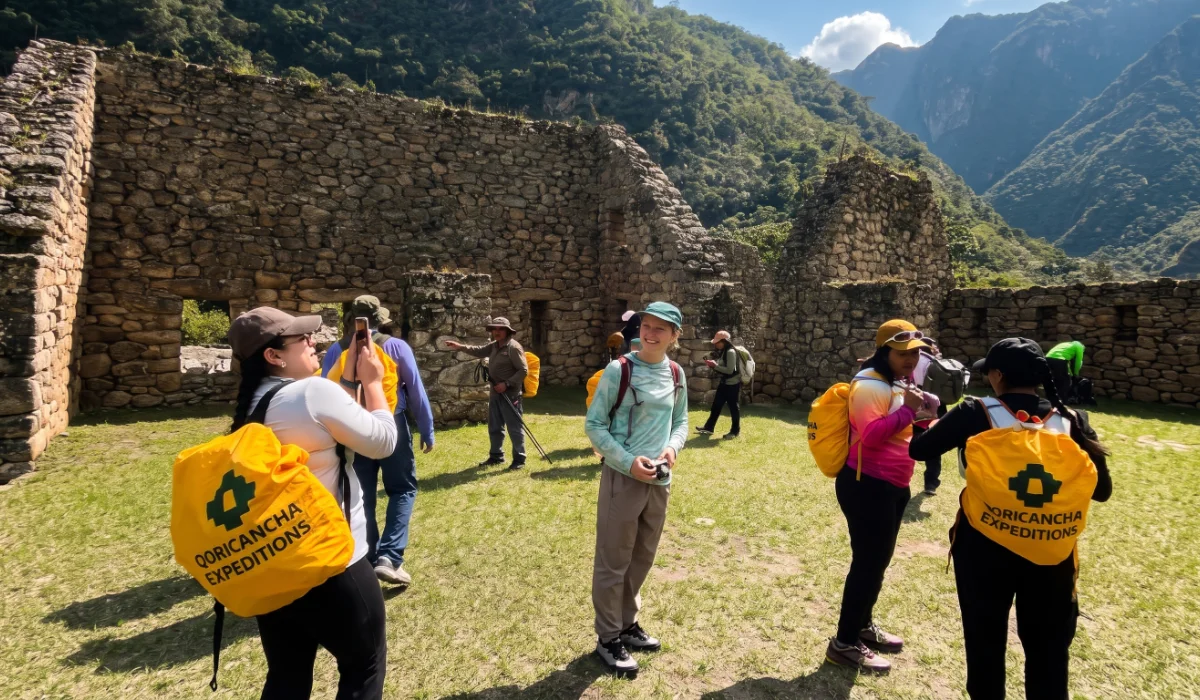
We explain prohibited activities before departure and make them part of the instructions followed during the trek. Clear preparation helps travelers understand both the restrictions and the reasons behind them.
Preparing Our Travelers Before the Hike
Our briefing, usually around 6 p.m. the evening before departure, reviews the route, key restrictions, and visitor responsibilities. Bring questions about site access, personal equipment, or a special request to that meeting.
Training Our Guides, Porters, and Trekking Cooks
Our team training covers campsite procedures, waste handling, hygiene, protection of archaeological sites, and cooperation with authorized personnel. Guides, cooks, and porters have different tasks, but each needs to understand the rules relevant to their work.
Our Commitment as a Local Tour Operator
We reinforce these practices during the operation through guide instructions and crew coordination. If you see a problem or receive an instruction you do not understand, raise it with your guide promptly.
protocol
Explore the Inca Trail with Qoricancha Expeditions
Choose your route according to its walking demands and the time available. Both options use the protected network and require the appropriate authorized arrangements.
Short Inca Trail 2 Days and 1 Night
This itinerary starts at Km 104 and follows the trail past Wiñay Wayna to the Sun Gate. Confirm the hiking day, overnight accommodation, and Machu Picchu visit included in your booking.
Classic Inca Trail 4 Days and 3 Nights
The Classic route includes several hiking days and overnight camps. Review the daily walking plan, assigned campsite arrangements, and group services when comparing departures.