

Inca Agriculture and Farming in the Andes
Inca agriculture combined terrace farming, irrigation, crops adapted to different elevations, and organized labor to produce food across the Andes. Potatoes and other tubers supported highland diets, maize flourished in warmer valleys, and preserved harvests helped communities get through periods when fresh food was scarce.
The Inca Empire expanded across western South America during the fifteenth and early sixteenth centuries. Its farmers worked in mountain valleys, on steep slopes, and in irrigated coastal landscapes, adjusting their methods to the land and available water.
Much of that knowledge came from earlier Andean societies. The Incas expanded and reorganized existing agricultural traditions, connecting local production with an imperial system of labor, roads, and storage.
Table of Contents
- How Geography Shaped Inca Farming
- Farming Across Mountains, Valleys, and Coastal Deserts
- How Altitude and Climate Shaped Crop Choices
- How Inca Terrace Farming Worked
- Turning Steep Slopes into Fields
- Building Terraces with Stone Walls and Layers of Soil
- Controlling Drainage and Protecting Soil from Erosion
- How Inca Irrigation Systems Brought Water to Fields
- Collecting Water from Springs and Streams
- Distributing Water Through Canals
- What Crops Did the Incas Grow?
- Potatoes and Other Andean Root Crops
- Growing Maize in Warmer Valleys
- Quinoa and Other Crops Suited to High Altitudes
- How Inca Farmers Worked the Land
- Planting with the Chaquitaclla Foot Plow
- Maintaining Soil Fertility
- The Role of Llamas and Alpacas in Agriculture
- How Agriculture Fed Communities and the Inca Empire
- Ayllu Communities and Shared Agricultural Labor
- Freeze-Drying Potatoes to Make Chuño
- Storing and Distributing Harvests Through Inca Storehouses
- What Surviving Terraces Reveal About Inca Farming
- Rain-Fed Farming on Machu Picchu’s Terraces
- Moray’s Circular Terraces and Their Debated Purpose
- Agricultural Terraces at Pisac and Ollantaytambo
- Andean Farming Before and After the Inca Empire
- Terrace Farming Traditions That Predate the Incas
- How Andean Communities Continue Traditional Farming Today
How Geography Shaped Inca Farming
Geography determined where crops could grow, how fields received water, and which resources communities could produce. A fertile valley and a cold highland slope required different farming decisions.
Farming Across Mountains, Valleys, and Coastal Deserts
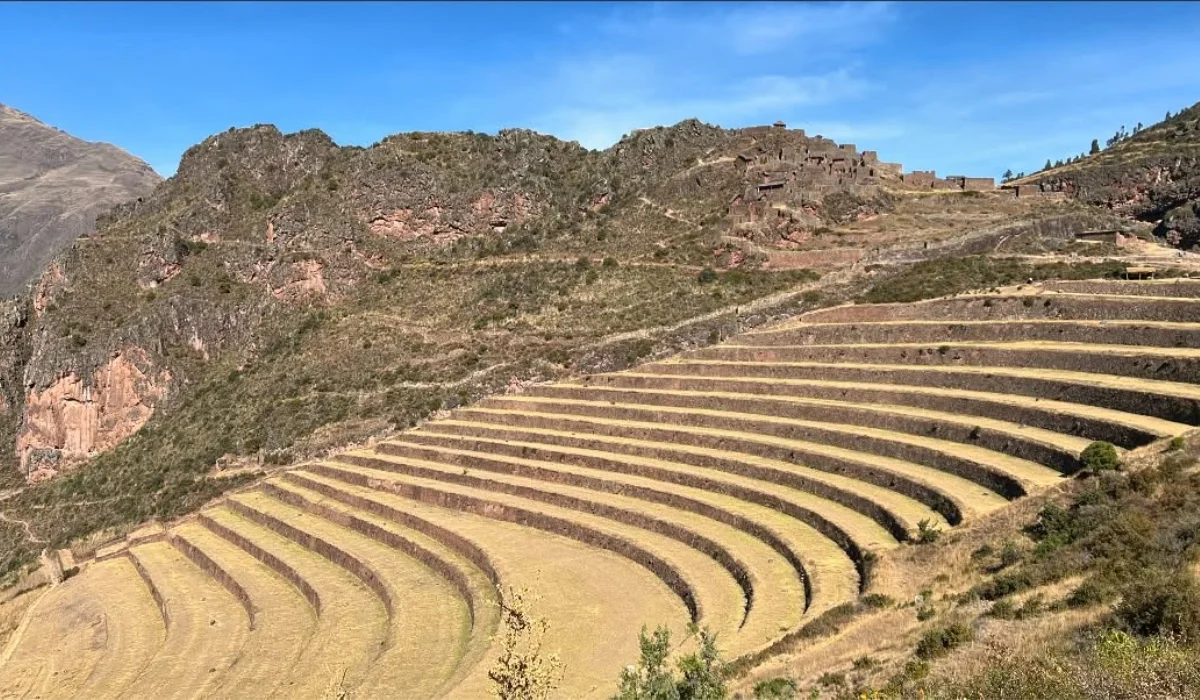
Inca farming extended across landscapes with very different limitations. Mountain slopes offered little level ground. Valleys provided warmer growing conditions and access to rivers. Along the Pacific coast, cultivation depended heavily on water brought into otherwise dry landscapes.
Coastal agriculture had deep roots before Inca expansion. Archaeological research in Peru’s Chincha Valley, for example, documents farming infrastructure and maize production associated with the pre-Inca Chincha Kingdom.
| Agricultural setting | Main challenge | Farming approach |
|---|---|---|
| Mountain slopes | Steep ground and soil loss | Terraces created planting surfaces and helped hold soil in place |
| Higher, colder fields | Frost and a limited growing season | Farmers selected suitable tubers and highland seed crops |
| Warmer valleys | Matching crops to local soil and water | Maize cultivation and irrigation where needed |
| Coastal desert valleys | Very little rainfall | Irrigation supplied cultivated fields |
The table describes broad patterns. Conditions varied within each region, and crop choices depended on the particular field and plant variety.
How Altitude and Climate Shaped Crop Choices
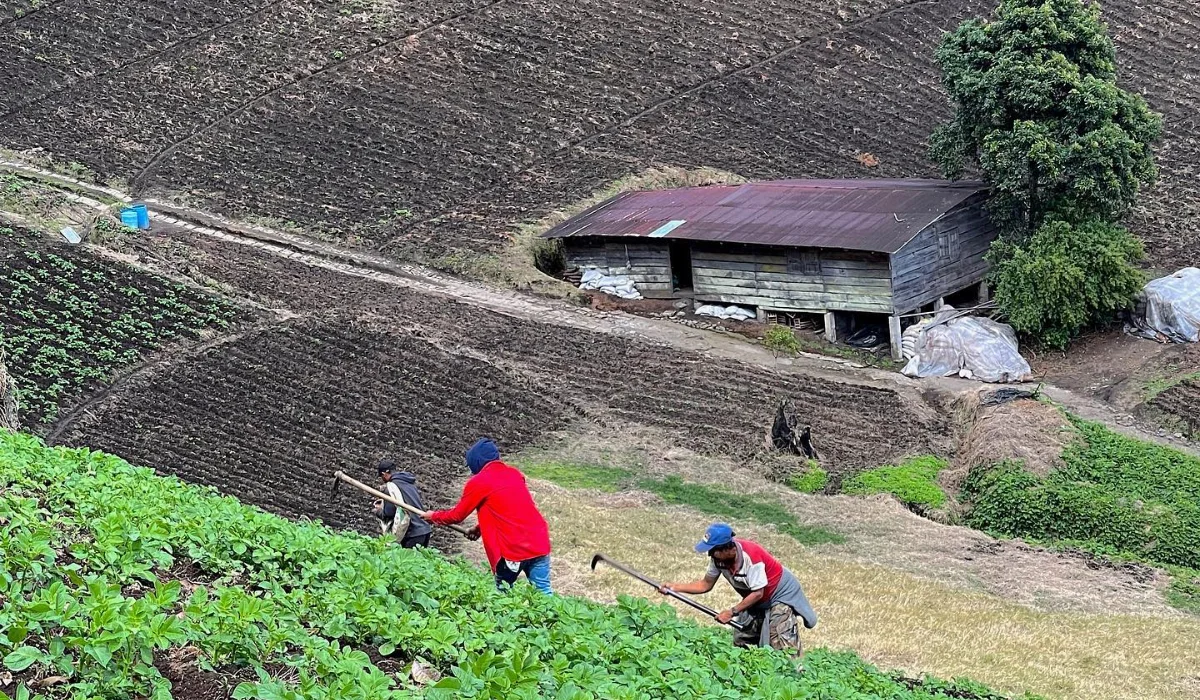
Altitude helped determine crop choices, but it worked together with rainfall, sun exposure, and local growing conditions. Farmers used different ecological zones to obtain a wider range of foods.
This also spread agricultural risk. Frost might damage crops in one location while fields elsewhere still produced a harvest. The Smithsonian’s National Museum of the American Indian describes this use of multiple elevations as a central feature of Inca food diversification.
Plant variety mattered, too. FAO’s crop information distinguishes quinoa types adapted to high plateaus, valleys, salty soils, and other environments. A crop’s name alone does not tell you which conditions every variety can tolerate.
How Inca Terrace Farming Worked
Inca terrace farming used stepped fields, commonly called andenes, to cultivate hillsides. Retaining walls supported the planting surfaces, while the terrace design helped manage soil and water.
Turning Steep Slopes into Fields
Terraces divided a long hillside into smaller agricultural surfaces. Farmers could work these platforms, plant crops, and maintain soil that would otherwise be more exposed to downhill movement. At Ollantaytambo, terracing extended cultivation beyond the fertile valley floor onto the surrounding slopes.
The shape of the land still mattered. Builders fitted terraces to hillsides rather than producing identical fields everywhere. A narrow mountain bench and a broad valley-side platform offered different amounts of planting space and required different construction work.
Building Terraces with Stone Walls and Layers of Soil
A terrace needed both a wall that could retain its fill and soil suitable for crops. Research at Machu Picchu identified deliberately placed agricultural soil above materials that allowed water to drain through the terrace.
The construction can be understood through three main components:
- Retaining wall: Supported the edge of the platform.
- Permeable fill: Stone fragments, gravel, and sandy material helped water move below the cultivated surface.
- Agricultural soil: Provided the upper layer in which plants grew.
These components explain the engineering principle. Their arrangement and dimensions varied with the site; one cross-section cannot represent every Andean terrace.
Controlling Drainage and Protecting Soil from Erosion
Terraces helped control erosion by breaking up the slope and retaining soil. Drainage addressed another problem: excess water accumulating within the field and behind its wall.
At Machu Picchu, researchers documented both underground drainage materials and surface routes that carried runoff toward drains. Small slopes on the terrace surfaces helped direct this water.
Irrigation supplies water to a field; drainage removes excess water. The work required depended on local conditions. In a wet setting, keeping water moving through and away from the terrace could be as important as supplying it in a dry one.
How Inca Irrigation Systems Brought Water to Fields
Where rainfall was insufficient, irrigation connected water sources with cultivated land. The design had to account for elevation, flow, and the route between the source and the field.
Collecting Water from Springs and Streams
Springs and surface water supplied Inca water systems. Tipón, near Cusco, provides a well-documented example: its network combined spring water with surface supplies through canals, aqueducts, and other hydraulic structures.
A source higher than the fields allowed water to move downhill by gravity. This made the source’s location important as well as the amount of water it could provide. Builders had to connect that water with the cultivated area while accommodating uneven terrain.
Water arrangements differed among sites. Some agricultural areas relied on irrigation, others on rainfall, and some used combinations of the two.
Distributing Water Through Canals
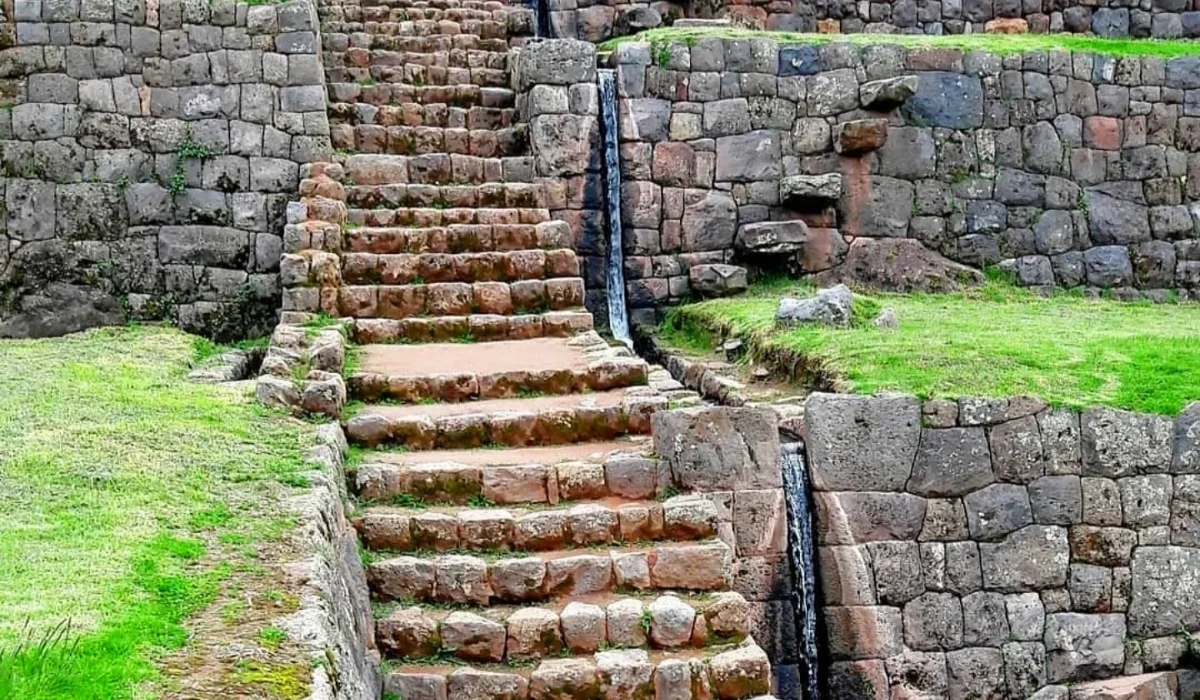
Canals guided water toward fields and divided it among different parts of a terrace system. Their slope and connections influenced how quickly water moved and where it arrived.
Research on Tipón describes water being distributed laterally along terrace channels, passed to lower platforms, and directed into drainage routes when there was excess flow. Structures built into the walls controlled the drops between levels.
The system also required upkeep. A channel blocked by sediment or debris could interrupt the supply farther downstream. Irrigation therefore depended on maintaining a connected network, along with the fields it served.
What Crops Did the Incas Grow?
The Incas grew potatoes, maize, quinoa, and other Andean crops, including oca, ulluco, and mashua. Their food system also included crops such as beans and squash. The mix varied with location and local growing conditions.
Potatoes and Other Andean Root Crops
Potatoes were especially important in highland agriculture. Farmers maintained different varieties, giving them options for local conditions, cooking, and preservation.
The wider Andean tuber tradition included:
- Oca: An edible tuber crop distinct from the potato.
- Ulluco, also called olluco: Another native Andean tuber.
- Mashua: A tuber cultivated alongside potatoes and other highland crops.
The International Potato Center describes growing these crops with potatoes as a tradition extending back thousands of years.
This diversity matters when discussing the Inca diet. “Potatoes” captures only part of the range of underground food crops that Andean farmers cultivated and passed down through generations.
Growing Maize in Warmer Valleys
Maize, or corn, was particularly valuable in the warmer agricultural valleys around Cusco. It provided food and was used to make chicha, a fermented drink with an important place in Inca ceremonies and offerings.
Maize therefore had agricultural and social value. Its importance extended beyond the amount of food a field produced: harvests also supported gatherings and ritual activities.
The Sacred Valley’s association with corn remains visible today. Its fertile land, climate, and water supply help explain why this region became an important agricultural center.
Quinoa and Other Crops Suited to High Altitudes
Quinoa supplied edible seeds that could be cooked or processed into flour. Some varieties are adapted to the cold conditions and shorter growing periods of the high plateaus, while others grow in different environments.
Cañihua, also spelled kañiwa, is another Andean seed crop associated with high-altitude farming. FAO describes it as strongly cold-resistant and commonly cultivated at high elevations.
These crops broadened the choices available to highland farmers. Their suitability depended on the particular variety and growing conditions, including the stage of growth when frost occurred. High-altitude agriculture required careful crop selection rather than assuming every plant could tolerate the same weather.
How Inca Farmers Worked the Land
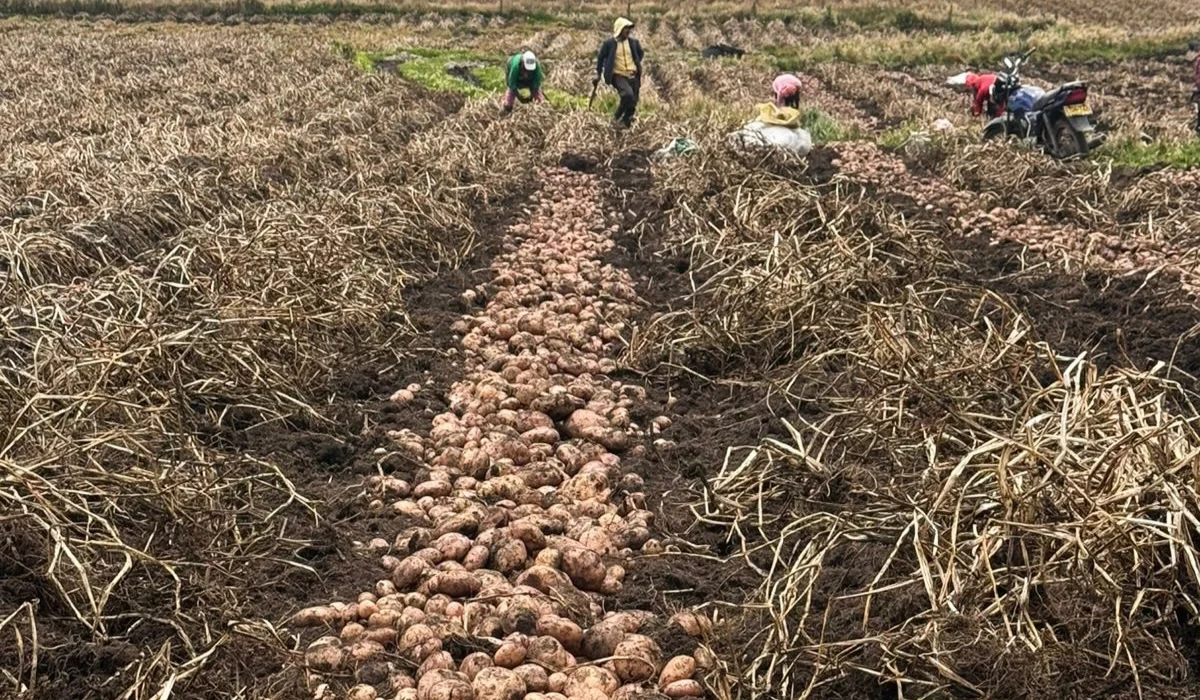
Fields needed repeated attention: preparing the soil, planting, maintaining water channels, and harvesting. Human labor, practical tools, and access to soil nutrients all contributed to agricultural production.
Planting with the Chaquitaclla Foot Plow
The chaquitaclla is an Andean foot plow used to open and loosen soil with human power. It has a long shaft, a working tip, and a foot support that lets the user push the tip into the ground.
Instead of pulling a continuous furrow, the operator can lever up sections of earth. A helper may turn the loosened soil or place a seed potato in the opening. This teamwork makes the tool’s operation easier to understand than its English name alone.
The chaquitaclla remains useful in small fields and on steep terrain. Its continued use also shows how a traditional tool can evolve: contemporary examples may use metal blades and materials introduced after the Inca period.
Maintaining Soil Fertility
Keeping soil in place was only part of maintaining a productive field. Farmers also needed to replenish nutrients. Animal manure contributed to agricultural soils, while access to other fertilizers varied by region.
Seabird guano is an important example. A 2026 archaeological study of maize from Peru’s Chincha Valley found strong evidence of guano fertilization before the Inca period. This supports a longer history of coastal soil management rather than attributing the practice’s invention to the Incas.
Crop rotation and periods of rest are also part of documented Andean farming traditions. FAO describes communal systems in which cultivation rotates among land sectors over several years.
These practices addressed different needs: conserving soil, returning nutrients, and managing how frequently a field was cultivated.
The Role of Llamas and Alpacas in Agriculture
Llamas and alpacas connected highland herding with the wider agricultural economy. High pasturelands supported herds that supplied meat and fiber, while llama caravans transported goods along the Inca road system. The Smithsonian describes harvest time as a particularly busy period for these caravans.
Llamas helped move agricultural products between places that produced them and places where they were needed. Camelid manure also provided material that could be added to cultivated soil.
Crop production and herding complemented each other. High grasslands, cultivated slopes, and valley fields contributed different resources to the same regional food system.
How Agriculture Fed Communities and the Inca Empire
A harvest became more useful when people could preserve it, store it, and move it where it was needed. Agricultural labor and food distribution connected households with the larger empire.
Ayllu Communities and Shared Agricultural Labor
An ayllu was a community organized around kinship and shared relationships with land. Households produced food within this wider social structure, which helped organize access to agricultural resources.
Several forms of cooperation and obligation supported the work:
- Household farming: Families cultivated food for their own needs.
- Reciprocal assistance: Through ayni, people exchanged help and maintained relationships of mutual support.
- State labor obligations: Under mit’a, communities supplied labor for imperial tasks, including agriculture and construction.
Reciprocal assistance and state-required work served different purposes. That distinction helps explain how agriculture could support family livelihoods while also supplying labor and goods to the empire.
Freeze-Drying Potatoes to Make Chuño
Chuño is preserved potato made using freezing nights, daytime drying, and the removal of moisture. Farmers turned the highlands’ cold conditions into a practical way to keep part of the harvest.
The traditional process generally includes:
- Exposing potatoes to nighttime frost.
- Pressing or treading the tubers to remove liquid.
- Drying them in the sun and dry air.
Methods differ by product. White chuño, often called tunta or moraya, includes a soaking stage; black chuño follows a different processing sequence.
Properly preserved potatoes can be stored for years, making them useful beyond the fresh harvest season. Preservation gave communities another way to manage food supplies when crops were seasonal or a future harvest was uncertain.
Storing and Distributing Harvests Through Inca Storehouses
Inca storehouses, called qollqas or colcas, held food and other supplies. They formed part of a state system that collected and redistributed goods, including during periods of poor harvests. Some administrative centers had large groups of these storage buildings.
Their design took advantage of natural airflow to help preserve stored materials. Storage also worked alongside the road network, allowing agricultural goods to be gathered and moved between regions.
Administration mattered as well. Inca officials used khipus, also commonly spelled quipus, to encode numerical information such as tax records and labor contributions.
Fields, preservation methods, warehouses, transport, and accounting each addressed a different part of the same challenge: making food available beyond the place and moment of harvest.
What Surviving Terraces Reveal About Inca Farming
Surviving sites provide evidence of particular farming and engineering decisions. Comparing them helps explain why water supply, terrace design, and purpose must be considered locally.
Rain-Fed Farming on Machu Picchu’s Terraces
The agricultural terraces studied at Machu Picchu were supplied by rainfall. A 1997 study published in Applied Engineering in Agriculture found that these terraces were not irrigated and assessed whether precipitation could support maize and potato cultivation.
The researchers also modeled their food-production potential. Under the study’s assumptions, the terraces alone could not meet the nutritional needs of an estimated population of about 1,000 people. That result suggests a need for food from outside the site’s agricultural sector; it is a modeled estimate rather than an exact census of its inhabitants.
Machu Picchu illustrates why a water system and irrigated farming should be examined separately. The presence of canals or fountains at a settlement does not, by itself, establish how every nearby field received water.
Moray’s Circular Terraces and Their Debated Purpose
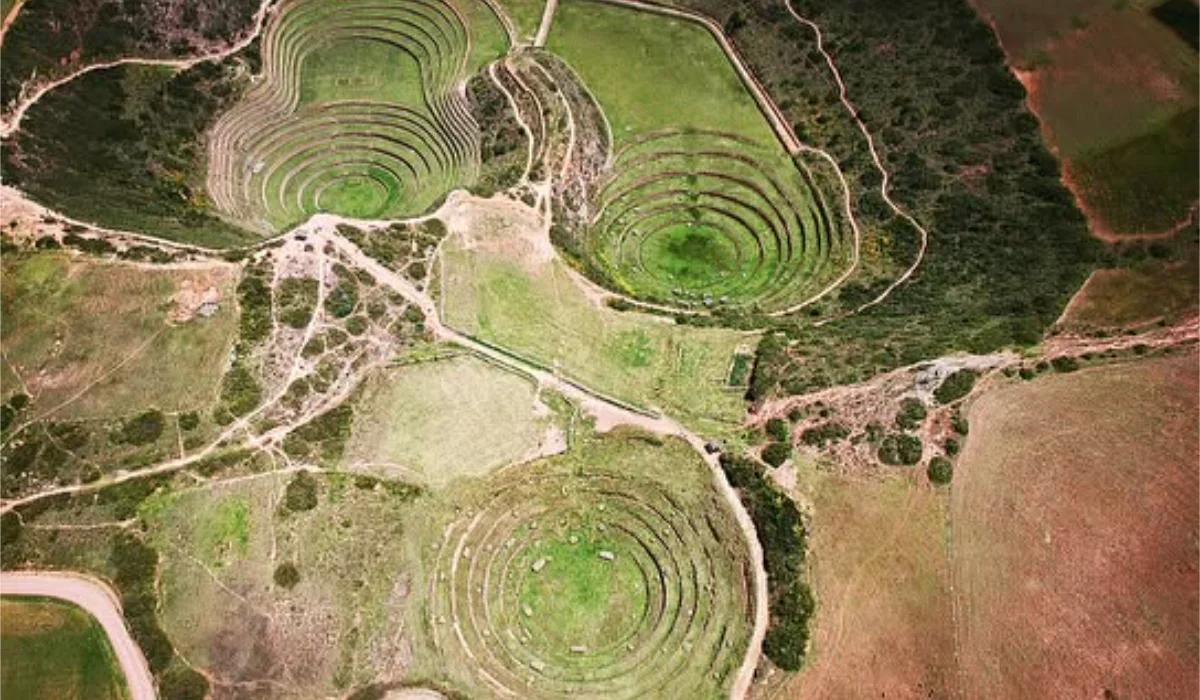
Moray’s circular terraces occupy natural depressions that the Incas reshaped into a carefully constructed landscape. The site is often described as an agricultural laboratory where crops could have been tested under different conditions.
That laboratory interpretation remains debated. The Wright Paleohydrological Institute began fieldwork using it as a working hypothesis, then reported that its observations and measurements did not support it. The institute’s researchers instead argued for a ceremonial purpose.
The visible terraces demonstrate substantial landscape engineering. Their precise intended use is a separate question. When describing Moray, it is more accurate to identify agricultural experimentation as an interpretation than to present it as a confirmed function.
Agricultural Terraces at Pisac and Ollantaytambo
Pisac’s terraces show how planting platforms could be fitted to a large, uneven hillside. Their arrangement makes the relationship between landform and agricultural construction easy to see.
Ollantaytambo places terraces within a wider productive valley landscape. In a Smithsonian interview, local community leader Alan Alberto Loayza Carrién describes the site’s combination of fertile valley land, terraced slopes, and water-management infrastructure.
When looking at either site, useful details include:
- How the terraces follow the hillside.
- Where walls retain the cultivated platforms.
- How water reaches or leaves particular areas.
- How the terraced land relates to fields below it.
Those features help explain the work behind the landscape, beyond the appearance of its stone walls.
Andean Farming Before and After the Inca Empire
Andean agriculture developed over thousands of years. Inca rule represents one period within a much longer history of cultivating crops, managing water, and adapting farming to mountain environments.
Terrace Farming Traditions That Predate the Incas
Terrace farming in the Andes predates the Inca Empire. Archaeological research at Cutamalla, in southern Peru, identifies a settlement and agricultural terrace system used roughly between 250 and 40 BCE, many centuries before Inca expansion.
This evidence shows why the history of Andean farming cannot begin with the Incas. Earlier communities developed agricultural landscapes and crop knowledge that later societies inherited, modified, or expanded.
The Incas’ contribution included extending cultivated areas and integrating agricultural production with imperial infrastructure. Their achievements drew on a substantial body of existing regional knowledge.
How Andean Communities Continue Traditional Farming Today
Quechua and Aymara communities continue to maintain agricultural knowledge in the Andes. FAO documents families in Peru’s Cusco–Puno corridor managing terraces, local irrigation, and crops adapted to different elevations.
This continuity includes practical work: maintaining fields and water systems, preserving crop varieties, and passing on knowledge about local growing conditions. Traditional practices also evolve alongside contemporary tools, markets, and materials.
For example, the continued use of the chaquitaclla reflects its usefulness in particular fields, while changes to its blade and shaft show that farmers adapt the tool to available resources.
Agricultural heritage survives through the people who use, maintain, and develop it. The terraces are visible evidence, but the knowledge needed to keep a field productive remains part of daily farming work.