

What Not to Bring on the Inca Trail
What Items Are Not Allowed on the Inca Trail?
Do not bring alcohol, glass containers, speakers, pets, weapons, wildlife traps, or trekking poles with uncovered metal tips onto the Inca Trail. Article 27 of the Inca Trail Network regulations lists 10 categories of prohibited or restricted items, including vehicles, certain fuels, drones, and unauthorized professional filming equipment.
The distinction between an outright prohibition and an authorization requirement matters. Ordinary travel photography and professional filming have different requirements. For walking equipment, metal-tipped trekking poles need rubber protectors, while sticks made from native wood are prohibited.
Article 27 covers equipment and objects that could affect safety, archaeological remains, wildlife, or the use of the protected route. Check both your daypack and any personal bag handed to the trekking crew before departure.
These are Inca Trail Network rules. The Machu Picchu archaeological site can have additional visitor restrictions, so an item suitable for the hiking section may need different arrangements for the site visit.
Table of Contents
- 10 Prohibited Items on the Inca Trail
- 1. Weapons, Hunting Equipment, and Sharp Tools
- 2. Traps for Capturing or Collecting Wildlife
- 3. Fossil Fuels Including Gasoline, Diesel, and Petroleum
- 4. Alcoholic Beverages and Prohibited Drugs
- 5. Glass Bottles and Containers
- 6. Speakers, Sound Systems, and Musical Instruments
- 7. Domestic and Exotic Animals
- 8. Trekking Poles Without Rubber Tips and Sticks Made from Native Wood
- 9. Bicycles, Tricycles, and Other Transport Vehicles
- 10. Drones and Unauthorized Professional Filming Equipment
- What Can You Bring on the Inca Trail Instead?
- How Much Water Should You Carry on the Inca Trail?
- How to Prepare Your Backpack Before the Inca Trail
- How Qoricancha Expeditions Helps You Prepare for the Inca Trail
- Preparation Before Your Trek
- A Detailed Pre-Trek Briefing
- Water Refills Throughout Your Expedition
- Responsible Travel Is a Team Effort
10 Prohibited Items on the Inca Trail
The following sections explain the 10 categories in Article 27 and what to check when preparing for an organized trek.
1. Weapons, Hunting Equipment, and Sharp Tools
Firearms, air guns, bows and arrows, hunting and fishing equipment, axes, machetes, picks, shovels, and other specified tools are prohibited. The provision also identifies hunting or field knives with steel blades longer than 7 centimeters.
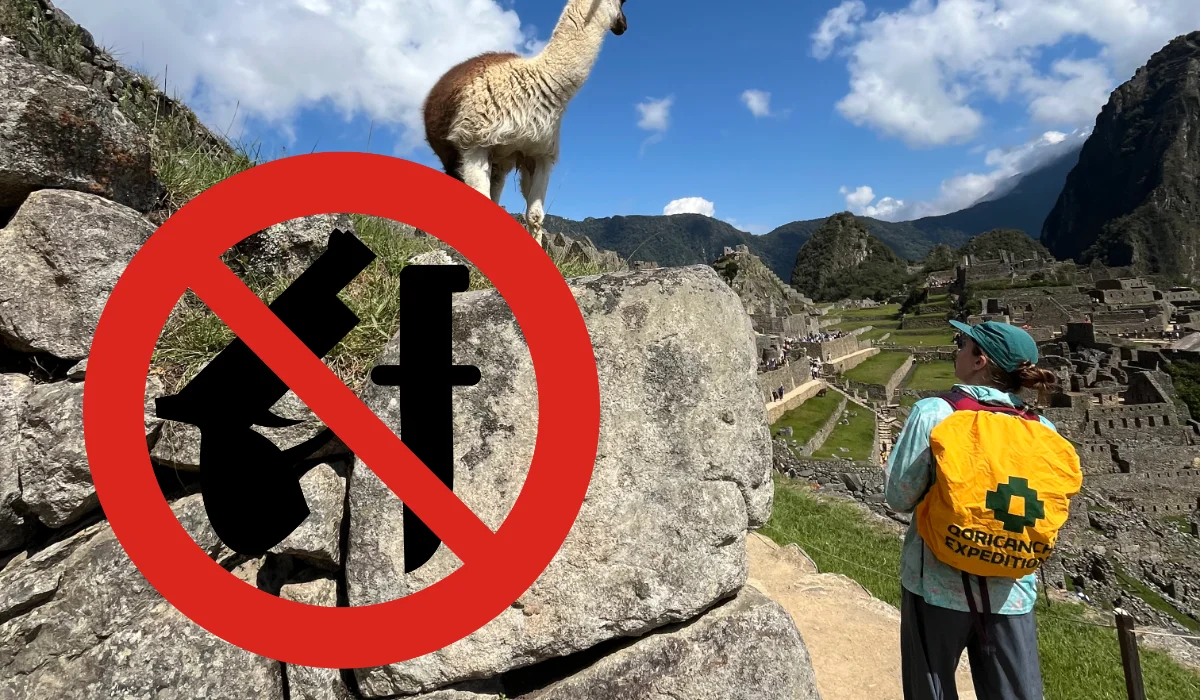
Do not interpret that measurement as permission for every smaller knife or multitool. Leave unnecessary blades and tools behind, and ask your operator about any essential specialized equipment before packing it.
2. Traps for Capturing or Collecting Wildlife
Do not bring traps or devices intended to capture or collect wild animals or plants. The restriction concerns collection equipment, not just large hunting traps.
Observe wildlife without handling or moving it. Photography and observation must also respect the separate rules against disturbing wild species.
3. Fossil Fuels Including Gasoline, Diesel, and Petroleum
Article 27 prohibits fossil fuels such as gasoline, diesel, and petroleum. Do not pack these fuels or bring a personal fuel supply for the trek.
Your operator coordinates the meals and camp kitchen included in your itinerary. At Qoricancha Expeditions, our team handles the cooking arrangements; travelers should follow the equipment guidance for their booked route.
4. Alcoholic Beverages and Prohibited Drugs
Alcoholic beverages and substances prohibited by applicable Peruvian law are not allowed. Do not pack beer, wine, spirits, or prohibited recreational drugs for hiking or camp use.
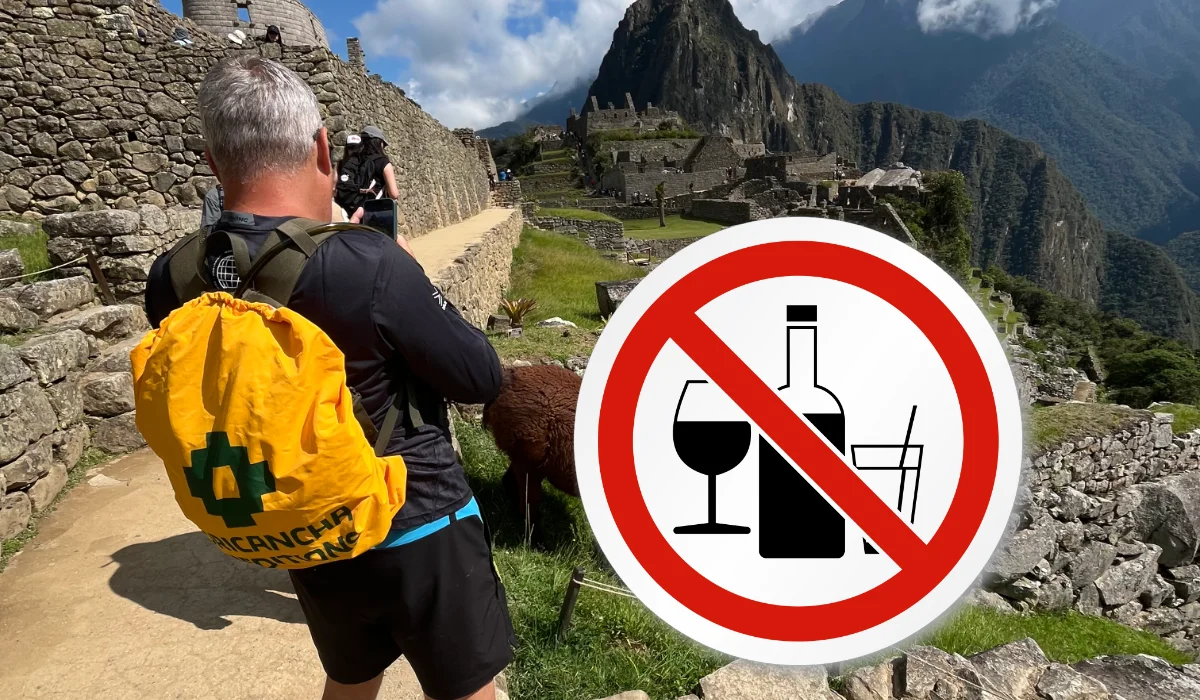
If you take prescribed medication, check any requirements that apply to the specific medicine before travel. Keep it clearly identified and discuss relevant medical needs with your operator; do not assume all substances have the same legal status.
5. Glass Bottles and Containers
Beverages and products packaged in glass containers are prohibited. Check toiletries and other personal products as well as drinking bottles, since the rule is not limited to water.
Choose reusable containers made from non-glass materials. For drinking water, a refillable bottle or hydration bladder is practical because it can be replenished at the refill points arranged for your trek.
6. Speakers, Sound Systems, and Musical Instruments
Do not bring speakers, sound systems, or musical instruments that generate disruptive noise. The regulation specifically identifies sound equipment and other noise-producing devices.
A phone does not need to be used as a speaker to disturb other groups. Keep sound low and remain able to hear your guide and other trail users.
7. Domestic and Exotic Animals
Article 27 prohibits domestic and exotic animals. Ordinary pet dogs, cats, and other companion animals should not be brought onto the route.
If you are traveling with a pet elsewhere in Peru, arrange its care before your trek. Do not assume an operator can add a pet to the registered hiking group.
8. Trekking Poles Without Rubber Tips and Sticks Made from Native Wood
Metal-tipped trekking poles must have rubber protectors. Walking sticks made from native wood are also prohibited, even if their ends are not metal.
Check that the rubber covers fit securely and remain in place. Confirm separate arrangements for the Machu Picchu visit with your guide rather than assuming the trail's pole rule applies throughout the archaeological site.
9. Bicycles, Tricycles, and Other Transport Vehicles
Do not bring bicycles, tricycles, or other transport vehicles onto the hiking route. The regulated trail is not a cycling route, and a vehicle cannot be substituted for a walking section.
Review the route's walking demands before booking. Transfers to and from the trail are separate from movement along the protected footpath.
10. Drones and Unauthorized Professional Filming Equipment
Article 27 addresses drones, other small aircraft, and professional filming equipment for unauthorized purposes. Article 26 separately requires prior authorization for flights over the network.
Do not bring a drone expecting to arrange permission at the checkpoint. For aerial recording or professional filming, establish the authorization requirements with the competent authorities before departure. A standard trekking booking does not provide that authorization.
Ordinary personal photography must also follow the rules at each site. Do not assume professional filming is exempt from authorization because a project is noncommercial.
What Can You Bring on the Inca Trail Instead?
Choose equipment that performs the necessary job without introducing a restricted item. The following alternatives relate to the hiking section and remain subject to any additional site-specific rules.
Practical equipment choices for an organized Inca Trail trek
| Leave out | Use or confirm instead |
|---|---|
| Glass drinking bottles | Reusable non-glass bottles or a hydration bladder. |
| Poles with exposed metal tips | Trekking poles fitted with secure rubber protectors. |
| Walking sticks made from native wood | Suitable manufactured trekking poles that meet the tip requirements. |
| Speakers or musical instruments | Keep personal audio quiet and remain able to hear instructions. |
| Alcohol | Drinking water and the nonalcoholic drinks provided or agreed for your itinerary. |
| Unnecessary knives or tools | The personal hiking equipment recommended for your booked trek. |
| Unauthorized aerial or professional filming equipment | Ordinary personal photography equipment, or official authorization for the planned production. |
| Bicycles and similar vehicles | A walking itinerary suited to your fitness and mobility. |
How Much Water Should You Carry on the Inca Trail?
At Qoricancha Expeditions, we recommend containers with approximately 3 liters of capacity for the Classic Inca Trail and 2 liters for the Short Inca Trail. These are carrying-capacity recommendations, not a fixed drinking allowance or a supply intended to last the entire trek.
Fill your containers before departure and carry enough to reach the next confirmed refill point. Our refills begin at the first lunch, so you need your own starting supply for the walk before that meal.
The amount you drink and carry between refills depends on conditions and individual needs. Review the first refill location and the intervals between supplies at your briefing.
How to Prepare Your Backpack Before the Inca Trail
Check your bags before leaving Cusco. A restriction still applies when an item is packed in a bag carried by the crew rather than in your own daypack.
- Check trekking poles. Fit secure rubber protectors and remove walking sticks made from native wood.
- Check containers. Replace glass packaging where possible and bring refillable, non-glass water containers.
- Review tools. Remove unnecessary knives, blades, and collection equipment.
- Leave alcohol behind. Check drink containers as well as snacks and toiletries.
- Remove speakers. Do not pack amplified sound equipment or musical instruments.
- Resolve filming questions. Confirm permissions for aerial or professional filming before departure.
- Review the hiking equipment. Use the footwear and personal equipment guidance for your route.
- Ask about uncertain items. Raise specific questions with your operator before the group reaches the checkpoint.
How Qoricancha Expeditions Helps You Prepare for the Inca Trail
We review equipment restrictions, water arrangements, and the route's requirements before departure. That gives you time to remove an unsuitable item or clarify a special equipment need before the trek begins.
Preparation Before Your Trek
Use the information for your booked itinerary to check personal equipment and containers. Tell our team in advance about any specialized item that may need authorization or a different arrangement.
A Detailed Pre-Trek Briefing
Your guide reviews the itinerary, equipment, safety recommendations, and key restrictions at the briefing, usually around 6 p.m. the evening before departure. Follow the meeting details supplied for your booking.
Water Refills Throughout Your Expedition
We provide drinking-water refills starting at the first lunch and continue according to the trek's arrangements. Bring reusable containers and confirm how much water to start with and where the following refill will be available.
Responsible Travel Is a Team Effort
Travelers and crew members both help keep restricted items out of the sanctuary. Follow the guide's instructions, use the waste collection arrangements, and raise equipment concerns before they become a problem at a checkpoint.